
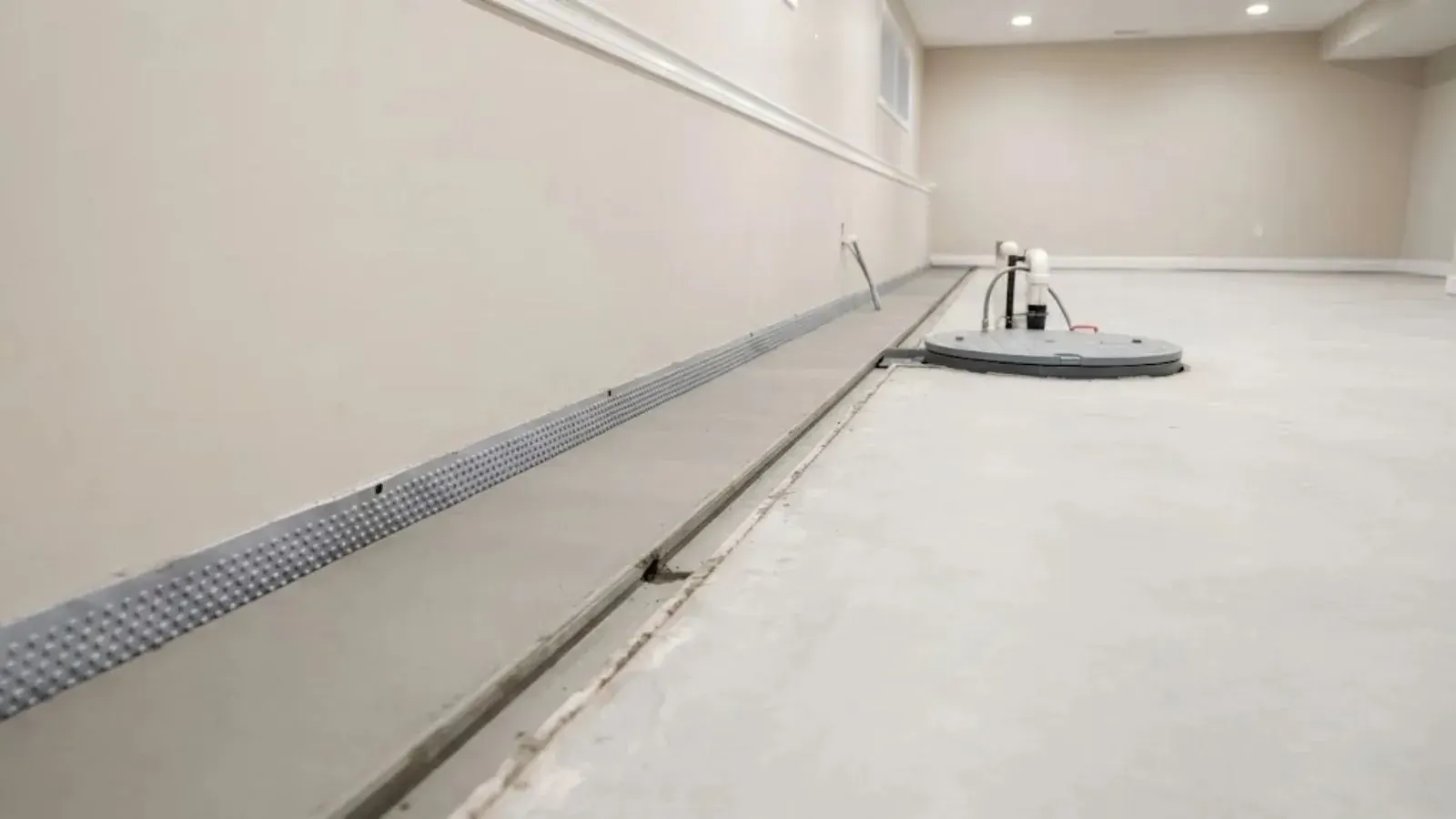
A wet basement has two possible sources: water from the ground and water from the plumbing. They look alike on the floor and are fixed in completely different ways, which is why diagnosis comes first.
We focus on the plumbing side of basement water control: interior drain systems, sump pits and pumps, floor drains, window well drains and sewer backwater valves. We book same-day appointments when available for a first look, and you get a clear price before work starts.
For a basement that is flooding right now, see emergency sump pump repair, because a failed pump needs attention before waterproofing does.
Is it groundwater or a plumbing leak?
A few observations narrow it down before anyone opens a wall.
| What you see | Points to | What to do |
|---|---|---|
| Dampness along the wall-to-floor joint after rain | Groundwater | Look at gutters, grading and drain tile |
| Water that appears even in dry weather | Plumbing leak | Test the water meter and call a plumber |
| Wet spot under a bathroom or kitchen above | Plumbing leak | Check supply lines and drains above |
| Water rising through the floor drain | Sewer backup or drain overflow | Stop using water and call |
| White chalky residue on the wall | Moisture moving through masonry | Control moisture at the source |
A meter test is the simplest way to rule out a supply leak: shut off every fixture and see whether the meter still moves. If it does, leak detection finds where the water is going.
Interior drain tile and the sump pit
An interior drain system collects water at the edge of the slab and routes it to a sump pit, where a pump sends it out of the house. It does not stop water from reaching the wall, it gives the water somewhere to go before it reaches the floor.
The pit and pump are the part we handle best. We check the pit depth, the pump, the check valve and the discharge route, because a drain system is only as good as the pump at the end of it.
Window wells, downspouts and grading
Many wet basements are caused by water that never should have reached the foundation.
Downspouts
Downspouts that end next to the foundation dump a roof's worth of water against the wall. Extending them away from the house is the cheapest fix.
Grading
Soil should slope away from the house. A flat or sunken area along the wall holds water.
Window wells
A clogged or undrained window well fills like a bucket and leaks through the window. A drain line from the well bottom can help.
These items are not plumbing work in the strict sense, but we point them out during the visit because fixing them often reduces how hard the pump works.
Floor drains and backwater valves
A floor drain in the basement connects to the building drain. If the public sewer or your lateral backs up, the first place it appears is the lowest drain, which is usually in the basement.
A backwater valve is a one-way valve in the building drain that closes when sewage tries to flow backward. It can help prevent sewer backups into a basement, and we can tell you if your house is a candidate. Ask whether your drain layout and local rules allow one.
If the floor drain overflows, stop using water and see sewer line repair for the next steps. The City of Maryland Heights says the sewer lateral is owned by the homeowner, and its lateral repair program may cover approved repairs, so a camera finding is worth keeping.
Crawlspace plumbing leaks versus groundwater
Crawlspaces collect moisture from both sources. A damp crawlspace after rain points to groundwater and drainage, while a puddle under one bathroom in dry weather points to a drain or supply leak.
We look at pipe sweat, drain joints and supply connections first, because a small plumbing leak can mimic a damp crawlspace. If the plumbing is sound, the fix moves to drainage and ventilation.
When you need a foundation specialist
An honest scope note
Cracks that widen, walls that bow inward and floors that heave are structural problems. They need a foundation or structural specialist, and plumbing work will not fix them.
We will tell you when a problem is outside plumbing, and we coordinate with the other trade when the drain and the foundation both need work.
What affects the cost of basement water control
We give a clear price before work starts. These factors move it the most.
Footage of drain and tile
A longer run costs more in material and labor.
Slab removal
Cutting and patching concrete adds time and cleanup.
Pump and backup
A pump, a check valve and a battery backup are separate pieces of the system.
Backwater valve
Installing one means cutting into the building drain.
Finish and access
A finished basement is harder to work in than an open one.
Homeowner policies often exclude groundwater seepage and flood damage. Ask your insurer, and call our dispatch line for your real number. For related work, see plumbing installation if you are planning a basement bathroom.
Guidance behind a waterproofing plan
The EPA publishes guidelines for controlling moisture in buildings, and the first steps are always the same: move water away from the foundation, then manage what still gets in. Gutters, grading and a working sump come before any interior drain or membrane.
Ask any contractor which guidelines their method follows and whether a permit applies. The City of Maryland Heights building division can confirm what a drain tile or sump change requires.
Basement water questions from Maryland Heights homeowners
Turn off all water use and check the meter. If it still moves, you have a supply leak. If the meter is still and the dampness follows rain, it is groundwater.
We focus on plumbing-side solutions: drains, sump systems, floor drains and backwater valves. Exterior excavation and structural work call for a foundation specialist, and we will say so.
It can help prevent backflow from the sewer into a basement drain, but it is not right for every house. We check your drain layout and explain the trade-offs.
Yes. A sump pump removes water collected by the drain system, so the pump is the working part. See our sump pump repair page for how it fails.
Many policies exclude groundwater seepage and flood, and some cover sudden plumbing leaks. Ask your insurer before work begins.