
If a toilet is overflowing or water is spreading from its base, stop the water first and call second. Our line is answered 24/7, and same-day appointments are offered when available. While you wait, turn the supply valve on the wall behind the toilet clockwise until it stops, lift the tank lid and hold the flapper closed if it is still filling the bowl, and do not flush again.
Most toilet problems come from a short list of parts: the flapper and fill valve inside the tank, the supply line and shutoff valve, the wax seal at the floor and the drain line that takes everything away.
We find which one has failed before we replace anything, and when the toilet itself is worn out, we install a new one and haul the old one away.
Toilet overflowing right now: what to do first
Do not flush again
Flushing sends more water into a bowl that cannot drain.
Close the supply valve
Turn the oval handle on the wall or floor clockwise. If it is stuck, shut off the main water valve for the house.
Stop the tank from filling
Lift the lid and push the float or flapper so the tank stops refilling the bowl.
Contain the water
Use towels, a wet vacuum if it is safe, and keep kids away from bathroom water that may contain waste.
Call the line
Tell the dispatcher whether other drains are slow, since that suggests a main line problem and not just this toilet.
If the tub, shower and other toilets are also slow, the blockage is probably past this toilet. That is a job for drain cleaning on the main drain, not a new toilet.
Running toilet or weak flush: the tank parts
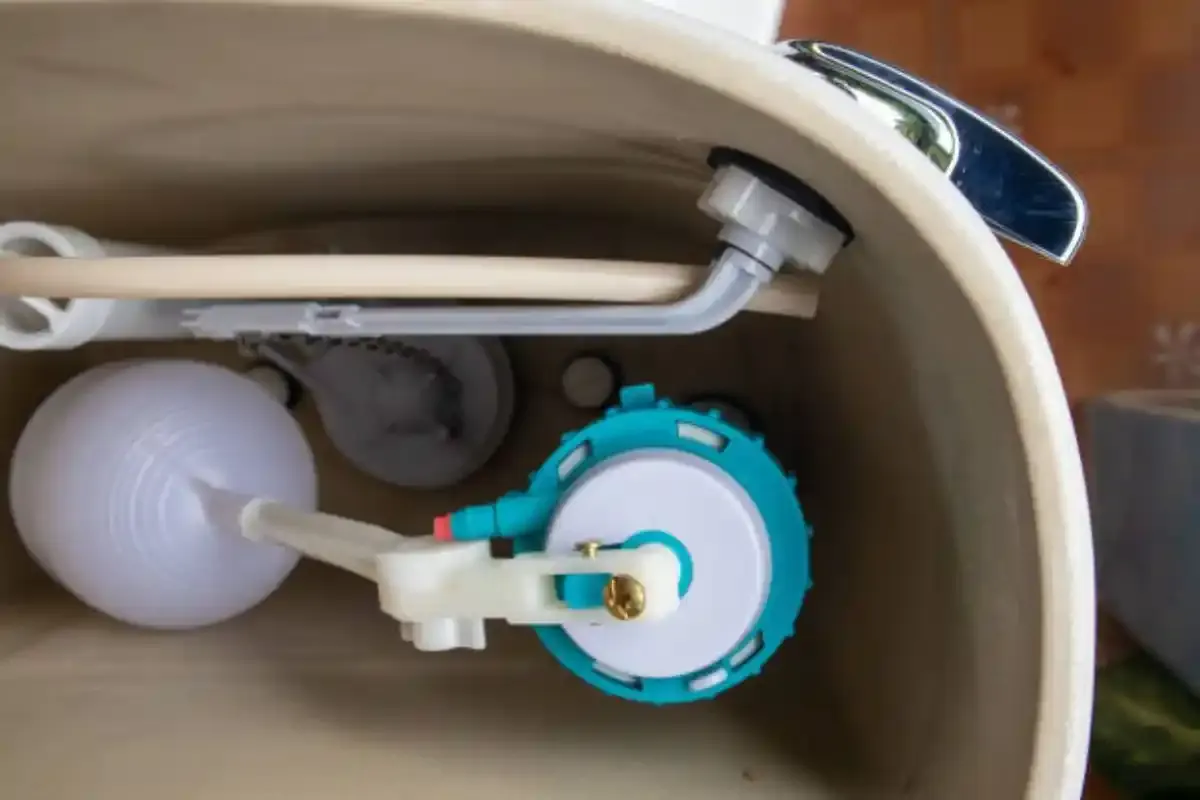
A toilet that runs after flushing or refills every few minutes wastes water and often raises the bill. The usual causes are a worn flapper that no longer seals, a fill valve that does not shut off at the right level, or a chain that is too tight or too loose.
A weak flush points to a different list. Mineral buildup can partly block the rim jets, a low water level in the tank shortens the flush and a partial clog in the trap or branch line slows everything down.
These are quick repairs once the cause is clear. Federal rules have limited new toilets to 1.6 gallons per flush since 1994, so an older toilet that still uses more is worth replacing as well.
Water at the base of the toilet
Water around the base usually means one of three things, and the fix is different for each.
Worn wax seal
The wax ring between the toilet and the drain flange fails when the toilet rocks or the flange moves. The floor around it will be damp after flushing.
Cracked or low closet flange
The flange is the ring on the floor that holds the closet bolts. A cracked or sunken flange will not hold the toilet or the seal tight.
Loose closet bolts
Bolts that have worked loose let the toilet shift. Tightening them is easy, but often hides a worse flange problem.
Condensation or tank leak
Sweating tanks drip on the floor in humid months. A bolt or washer leak inside the tank can mimic a base leak.
A toilet that rocks should be lifted and reset with a new seal, not just caulked. Caulk hides a leak and lets water rot the subfloor behind the finish.
Supply lines and shutoff valves that fail
A braided stainless supply line can burst at a coupling, and an old shutoff valve can drip at the stem or refuse to close. A large flow from a wall behind the toilet is serious, because you may not be able to stop it at the fixture.
In that case go to the main water shutoff, usually near where the water line enters the house, and turn it clockwise. Then call the line, and we will replace the supply line, install a new quarter-turn valve and check the wall for damage.
Replacing or installing a toilet
When a toilet is cracked, leaks from the tank, or flushes poorly even after a repair, replacement is more sensible than another visit.
| Choice | What to check | Why it matters |
|---|---|---|
| Rough-in distance | Measure from the wall to the center of the flange, commonly 12 inches | A toilet with the wrong rough-in will not sit right |
| Bowl shape | Round or elongated | Elongated bowls need more room in front |
| Flush design | Gravity or pressure-assisted | Gravity is quieter and simpler, assisted flushes harder |
| Height | Standard or comfort height | Comfort height is easier for many users |
We set the toilet on a new seal, check the flange and bolts, test the flush several times and make sure there is no weeping at the base or supply.
Do you need a permit to replace a toilet?
The City of Maryland Heights lists replacing a toilet with no relocation as ordinary repair that does not need a permit. If you are moving the toilet to a new spot in the room or adding a bathroom, that changes the work and the building division at (314) 291-6550 can tell you what applies.
For new bathrooms and moved fixtures, see our plumbing installation page.
What affects the price of toilet repair
You hear a clear price before work starts. These factors set it.
Repair or replacement
Tank parts are modest. A full toilet and installation costs more.
Flange condition
A damaged flange adds work under the toilet.
Supply and valve replacement
Quarter-turn valves and braided lines are small additions that prevent the next leak.
Drain problems
A main line blockage is billed as drain work.
Timing
Night and weekend dispatch is priced differently from a weekday visit.
Most policies cover sudden water damage but not the toilet itself or gradual leaks, so ask your insurer. Property managers can use the same dispatch line for tenant calls.
Toilet calls near Maryland Heights
We repair toilets across the 63043 ZIP code and in nearby areas like Creve Coeur 63146. For other fixture problems, see our faucet repair page.
Toilet standards worth knowing
Toilets sold in the United States are covered by the ASME A112.19.2 standard, and EPA WaterSense labels models that use 1.28 gallons per flush or less. A toilet that runs or short-flushes often has a worn flapper or a mis-set fill valve, and the replacement part needs to match the tank design.
Replacing a toilet in the same location is ordinary work, and the City of Maryland Heights lists no permit for it. Moving the toilet is different, so ask the building division first.
Toilet repair questions from Maryland Heights residents
Yes. An overflowing toilet or a supply line spraying behind the bowl can be called in at any hour. The 24/7 line sends a plumber, same-day when available, and the price is stated before parts come out of the truck.
The wax seal under the toilet has probably failed, or the flange is cracked or loose. The toilet must be lifted, the seal and flange checked and the toilet reset.
A worn flapper, a misadjusted fill valve or a tangled chain usually causes it. These parts are inexpensive to replace once identified.
Many people can, but the seal, flange and bolts must be set correctly or the toilet will leak. If you are unsure, we install it and test it.
The City of Maryland Heights says replacing a toilet with no relocation does not need a permit. Relocating or adding fixtures is different, so ask the building division.
That points to the main drain, not the toilet. We clear it with a cable or jet and camera the pipe if the problem returns.