
A backed-up main line is an emergency, and a line that a cable could not clear is often a job for hydro jetting. Our dispatch line is open 24/7, and we offer same-day appointments when available. While you wait, stop running water in the house, keep the washer and dishwasher off, and keep children and pets away from any standing water because it may contain sewage.
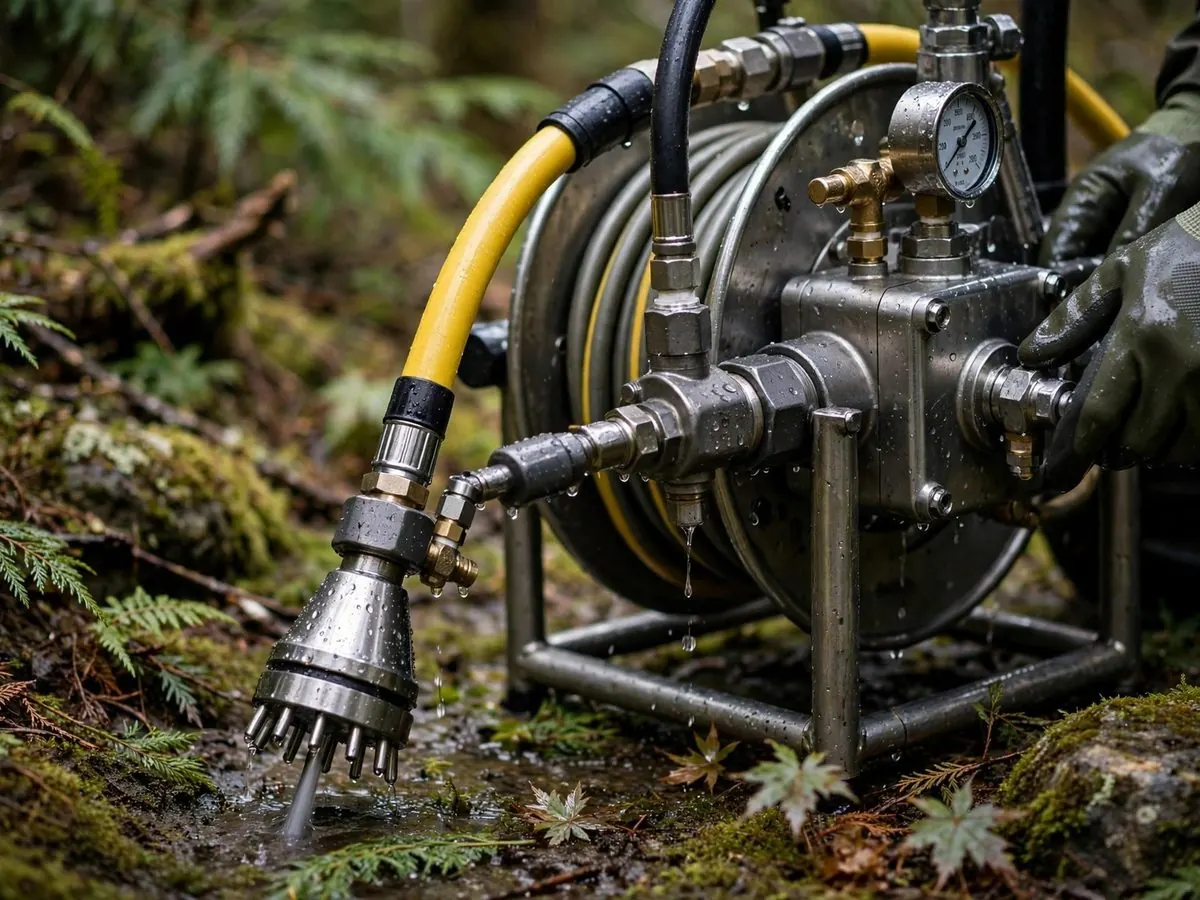
Hydro jetting sends a controlled stream of water through a hose and a shaped nozzle to scrub the inside of the pipe. It cuts grease, scale, silt and small roots in one pass and leaves the wall clean, which is why it is the usual answer when a line clogs again and again.
We run a camera through the line before we start, so we know the pipe can take the pressure, and again afterward, so you see the result and not just hear about it.
The cable stopped short, or the clog came back
Most jetting calls begin with a story. A plumber ran a cable, it hit something at 40 or 60 feet and would not go farther, or the drain worked for a few weeks and then slowed down again. Another common version is a main line that backs up every time heavy laundry runs or the family has guests.
Those patterns point to buildup on the pipe wall, not a single plug. Grease hardens in a ring, scale narrows cast iron from the inside, and tree roots find joints and fill the pipe with fine hair-like growth. A cable pokes a hole through the middle and leaves most of that material where it was.
Gurgling toilets, a bathtub that rises when the washing machine drains and a floor drain that smells after rain all fit the same picture. If that sounds familiar, jetting is likely worth pricing before you pay for another cable visit.
What to do right now if the line is backing up
Before the plumber arrives
- Stop using sinks, tubs, toilets, the dishwasher and the washing machine.
- Find the cleanout cap, usually a round or square plug near the foundation or in the basement, and keep the area around it clear.
- Skip chemical drain cleaners. They do not clear a full main line and they put caustic liquid in the work area.
- Turn off power to any outlet or appliance that sits in or near standing water.
- Call the 24/7 line and describe which fixtures are backing up and which are still working.
Night and weekend calls are handled the same way as daytime ones. If a jetting rig cannot reach you until morning, the dispatcher will say so and tell you how to limit the mess until then.
How hydro jetting works, step by step
The method is simple in principle. The details are in the nozzle choice and the pressure, both of which we match to the pipe.
Open an access point
We pull a cleanout cap or, when there is none, remove a toilet or open a roof vent so the hose can enter the line without a mess.
Camera the line first
A short inspection shows roots, grease, scale and any cracked or sagging section, and tells us how hard we can safely push.
Pick the nozzle
A forward-facing nozzle drills through a blockage. A rotating nozzle with backward jets scrubs the wall, and a root-cutting head chews through fibrous growth.
Work from the far end back
The hose pulls itself forward on the jets, then we draw it back slowly so the water washes debris toward the cleanout where we can control it.
Camera again and flush
We repeat the inspection, run water through every fixture and confirm the pipe is clean, not just open.
Residential rigs run at several thousand pounds per square inch at the nozzle, and we turn the pressure down for older clay or thin-walled pipe. Hoses of 100 feet or more let us reach the street side of a long lateral from a single cleanout.
Jetting, cabling or a camera: choosing the first move
Different clogs call for different starting points. This is how we sort them when a call comes in.
| What you describe | We start with | Reason |
|---|---|---|
| First clog ever in a kitchen or bath branch | Cable | A single plug rarely needs more |
| Cable stalled partway down the main | Camera, then jet or repair | Something solid may be blocking it, and jetting a broken pipe makes it worse |
| Same drain slows every few weeks | Jet | Buildup on the wall is refilling the channel |
| Gurgling and smell, no overflow yet | Camera | Find out whether it is grease, roots or a sag before choosing |
Our drain cleaning page covers the cable work for everyday clogs, and a sewer camera inspection can be booked on its own when you only want to see inside the pipe.
Grease, restaurants and busy kitchens
Fat, oil and grease are the biggest repeat offenders in food service lines. The city's own site counts about 1,800 businesses and 4,000 hotel rooms in Maryland Heights, and kitchens in hotels, banquet spaces and restaurants send a steady load of grease into their drains.
For those properties, jetting is a scheduled maintenance tool as much as a rescue. Our commercial plumbing crews can plan cleaning after closing time so a kitchen reopens on schedule.
Roots: jetting clears them, it does not remove the cause
Roots enter through cracked joints and grow wherever warm, nutrient-rich water leaks. A root-cutting nozzle clears the pipe, but the roots grow back if the joint stays open.
The City of Maryland Heights says the sewer lateral belongs to the homeowner, and its lateral repair program can pay for approved repairs on properties with six or fewer dwellings. If our camera shows a cracked joint behind the roots, that footage supports your claim and points to sewer line repair as the lasting fix.
When we will not jet a line
Jetting is not for every pipe
A pipe that has collapsed, separated at a joint or sagged into a belly can be damaged further by high-pressure water, and water can wash soil into the break. If the camera shows that, we stop and talk through repair options before doing anything else.
We also need a way in. A line with no cleanout and no safe fixture to pull may need an access point added first, which is a small plumbing job on its own.
What changes the price of a jetting visit
You hear a clear price before work starts. These are the factors that decide it.
Pipe length and size
A 3-inch branch and a 100-foot, 4-inch lateral need different hose lengths and different time on site.
How heavy the buildup is
Thin grease washes away quickly. Thick scale or a dense root mass takes several passes with different nozzles.
Access
An exterior cleanout saves time. Pulling a toilet or adding a cleanout is extra work.
Camera recording
Before and after video takes time, and it also gives you proof for a landlord or a city claim.
When you call
Night, weekend and holiday dispatch is priced differently from a weekday booking, and we tell you which applies.
Homeowner insurance often excludes drain and sewer line maintenance, though sudden damage from a backup can be covered under some policies, so ask your insurer. For your own number, call the dispatch line and describe what the drains are doing.
Jetting calls around Maryland Heights
We run jetting calls across the 63043 ZIP code and neighboring 63044, 63045 and 63146. Lines near the I-270 corridor in Bridgeton are a regular stop, and we reach the rest of our service area on request.
Standards that govern jetting work
Pipe condition decides whether jetting is safe, and the industry reference for describing that condition is the NASSCO Pipeline Assessment Certification Program (PACP) coding standard. When a camera shows cracks or offset joints, we describe them in those terms so you can compare opinions.
Jetting a cracked clay or cast iron line can make the damage worse, so a camera pass first is the standard way to decide between jetting and a repair.
Hydro jetting questions from Maryland Heights property owners
Yes. A main line that is backing up on a Sunday evening still gets answered. The 24/7 line sends a crew when a jetter is the right tool, and nights and holidays are covered. You hear the price before the hose goes into the cleanout.
Not when the pipe is sound and the pressure is set for it. We camera the line first, and if it shows cracks, offsets or a collapse, we recommend repair before any jetting.
A cable cuts a channel through the clog. A jet washes the entire inside surface, so grease and scale come off the wall and the pipe regains its full width.
A cleanout makes the job faster and cleaner. Without one, we can work through a pulled toilet or a roof vent, or add a cleanout so future visits are simpler.
Yes. Property managers can schedule jetting after closing so the kitchen opens on time, and the camera video documents the condition of the line.
It depends on what caused the clog. A grease line stays clear as long as the kitchen habits stay the same, while a rooted line clogs again until the cracked joint is repaired.