
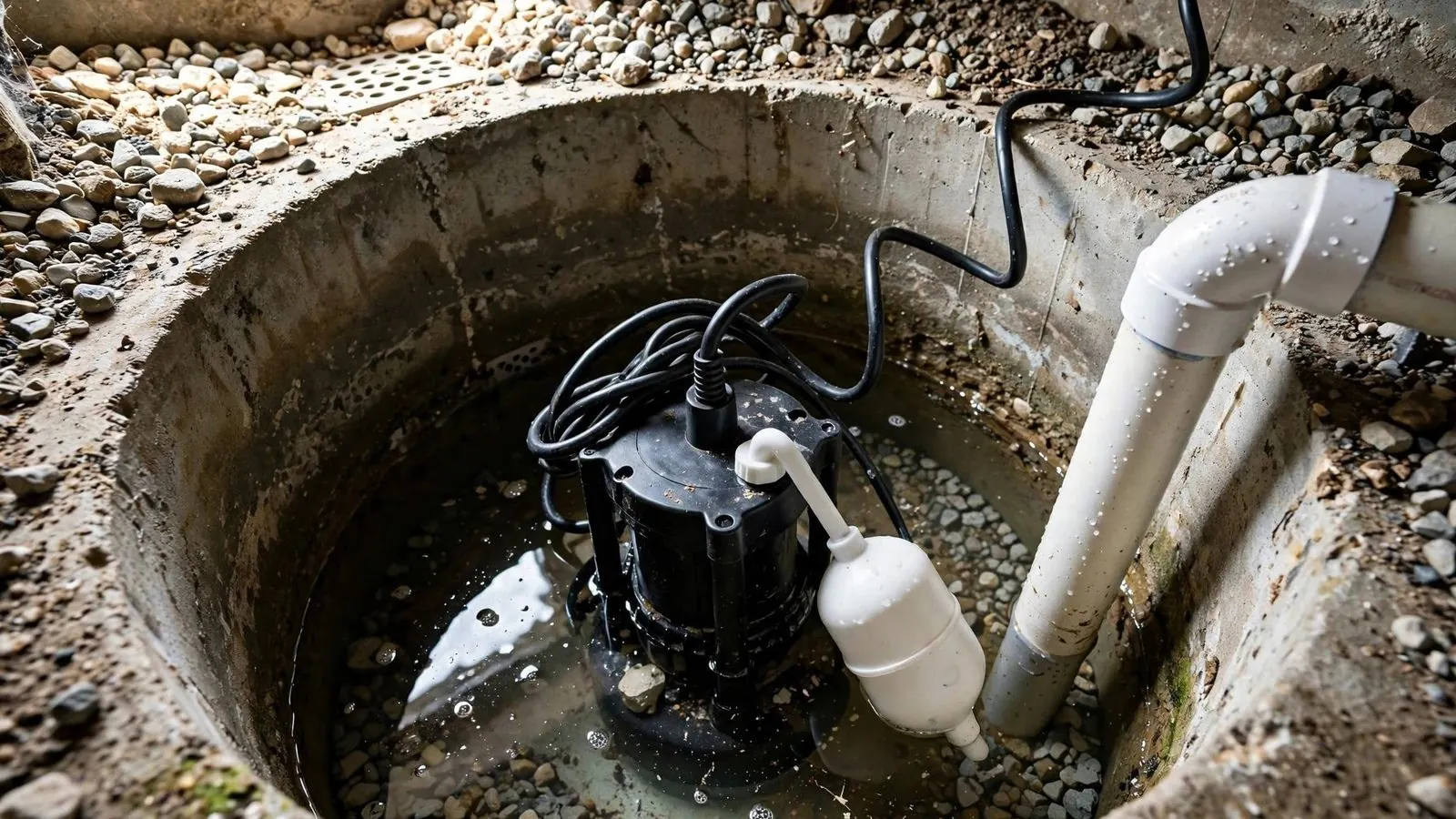
If water is rising in the sump pit or standing on the basement floor, treat it as an emergency sump pump repair call. Our 24/7 line is answered around the clock. While you wait, stay out of standing water if anything electrical is wet, turn off power to the basement at the panel only if the panel is dry, and move valuables off the floor.
Do not reach into the pit while the pump is plugged in. If the pump is running but not moving water, a clogged intake, a stuck check valve or a frozen discharge line is the usual cause, and a plumber can usually tell within minutes.
We book same-day appointments when available and tell you the price before work starts. After the repair, we test the pump through a full cycle so you are not guessing whether the next rain will find it ready.
Sump pump failed and water is rising: what to do first
These steps reduce damage while you wait for a plumber.
Make the area safe
Stay out of the water if outlets, extension cords or appliances are submerged. If you are unsure, wait for the plumber.
Check the obvious
Confirm the pump is plugged in and the breaker has not tripped. A GFCI outlet can trip in wet conditions.
Lift and test the float
If the float arm is stuck against the pit wall, freeing it can restart the pump. Do this only if the pump is unplugged.
Move belongings
Lift boxes, rugs and electronics off the floor and away from the lowest spot.
Call the 24/7 line
Tell the dispatcher what you see, how high the water is and whether the pump is running.
How a sump system fails
Most failures come down to a handful of parts, each with a recognizable symptom.
Float switch
A stuck or tangled float keeps the pump from starting, or keeps it running dry and burning the motor.
Check valve
A failed check valve lets water in the discharge pipe fall back into the pit, so the pump cycles constantly.
Discharge line
A clogged, crushed or frozen discharge line leaves the pump running without moving water.
Motor and impeller
Silt and gravel wear the impeller, and an old motor eventually stops. The pump hums but does not pump.
Power
A tripped breaker, a failed outlet or an outage stops the pump, and only a battery backup keeps it going.
Undersized pump
A pump too small for the inflow runs nonstop during a storm and fails early.
Which symptom points to which fix
| What you notice | Likely cause | Typical fix |
|---|---|---|
| Pump hums but water does not move | Clogged impeller or intake | Clean or replace the pump |
| Pump cycles every few seconds | Failed check valve | Replace the check valve |
| Pump runs all the time | Stuck float or undersized pump | Adjust or replace the float or the pump |
| Pump does not start | Power, switch or dead motor | Test power, replace switch or pump |
| Pit overflows in a storm | Pump too small or discharge blocked | Upsize the pump and clear the line |
Battery backup and water-powered backup pumps
Storms that raise groundwater often knock out power at the same time. A battery backup pump sits beside the main pump in the pit and runs on a deep-cycle battery when the main pump loses power. It buys hours, not days, and the battery needs testing and eventual replacement.
A water-powered backup uses the pressure of your home's water supply to push water out of the pit. It needs no electricity, but it also uses water while it runs, and some utilities and municipalities restrict or prohibit it. Ask Missouri American Water at 1-866-430-0820 and the building division at (314) 291-6550 before you decide.
For basements that flood often, a battery backup with an alarm is the most common choice. We explain the options and install what fits the pit and the budget.
Ejector pumps are not the same as sump pumps
Know which one you have
A sump pump moves groundwater out of a pit. A sewage ejector pump lifts wastewater from a basement bathroom, laundry or floor drain up to the sewer line, and it sits in a sealed basin with a vent.
Ejector failures are more urgent because the water is sewage. If a basement bathroom will not drain or the basin alarm is sounding, stop using the fixtures and call us. Adding a basement bath later? Our plumbing installation crews plan the ejector basin as part of the rough-in.
Sizing and replacing a sump pump
A replacement pump is sized by how much water enters the pit and how high it must be lifted. A pump that is too small runs constantly and fails early, and a pump that is too large short-cycles.
When we replace a pump, we also inspect the pit, the check valve and the discharge route out of the house. Replacing only the pump and leaving a worn check valve in place invites a repeat failure.
A river city and a basement that needs a plan
The Missouri River forms the western edge of Maryland Heights, and many properties sit on low ground in the river's floodplain valley. In places like that, groundwater tends to sit closer to the surface, so a sump pit with a working pump and a backup is worth testing before the wet season.
Test your pump every few months by pouring a bucket of water into the pit and watching it start, run and shut off. If it does not, call before the storm and not during it.
If water comes in through the walls or the slab even with a working pump, our basement waterproofing page explains the drain tile and grading side of the problem.
What affects the cost of sump pump repair
We give a clear price before work starts. These factors move it the most.
Repair or replacement
A check valve or float costs less than a new pump, and an old motor is rarely worth rebuilding.
Pump type and size
A larger pump with a cast iron body costs more than a basic thermoplastic unit.
Backup system
A battery backup or a water-powered unit adds equipment and installation time.
Pit and discharge condition
A cracked pit or a clogged discharge adds work.
Timing
Storm-night dispatch is priced differently from a planned daytime visit, and you hear it first.
Homeowner policies often exclude groundwater and sump pump failure unless an endorsement was added. Ask your insurer before assuming a loss is covered, and call our dispatch line for your real number. For a related drain problem, see drain cleaning. We also run pump calls in nearby Bridgeton and the surrounding towns.
Standards and rules around sump pumps
Sump pumps are covered by UL 778 for motor-operated water pumps, and the discharge pipe has to carry water away from the foundation. A pump that runs constantly or never starts is often a stuck float or a failed check valve, both of which are parts rather than a whole new pump.
Ask the City of Maryland Heights building division about discharge rules for your lot, since where the water goes can matter as much as the pump itself.
Sump pump questions from Maryland Heights homeowners
Yes. A sump pit that is filling during a storm is an overnight problem. The 24/7 line answers whenever the pump quits, same-day appointments are available when they can be, and the price is clear before we swap or repair the unit.
Every few months, and before spring and heavy-storm seasons. Pour a bucket of water into the pit and confirm the pump starts, empties the pit and shuts off.
If your basement floods when the power goes out, yes. A battery backup keeps the pit empty during an outage, but it needs a charged battery and periodic testing.
Some utilities and municipalities restrict them, and they use water while running. Ask Missouri American Water at 1-866-430-0820 and the building division at (314) 291-6550 before you install one.
A sump pump removes groundwater from a pit. An ejector pump lifts sewage from a basement bathroom or laundry to the sewer line, so its failure is more urgent.
It depends on how often it runs and the condition of the pit. A pump that runs often wears faster, and a pump that is more than several years old deserves a test.