
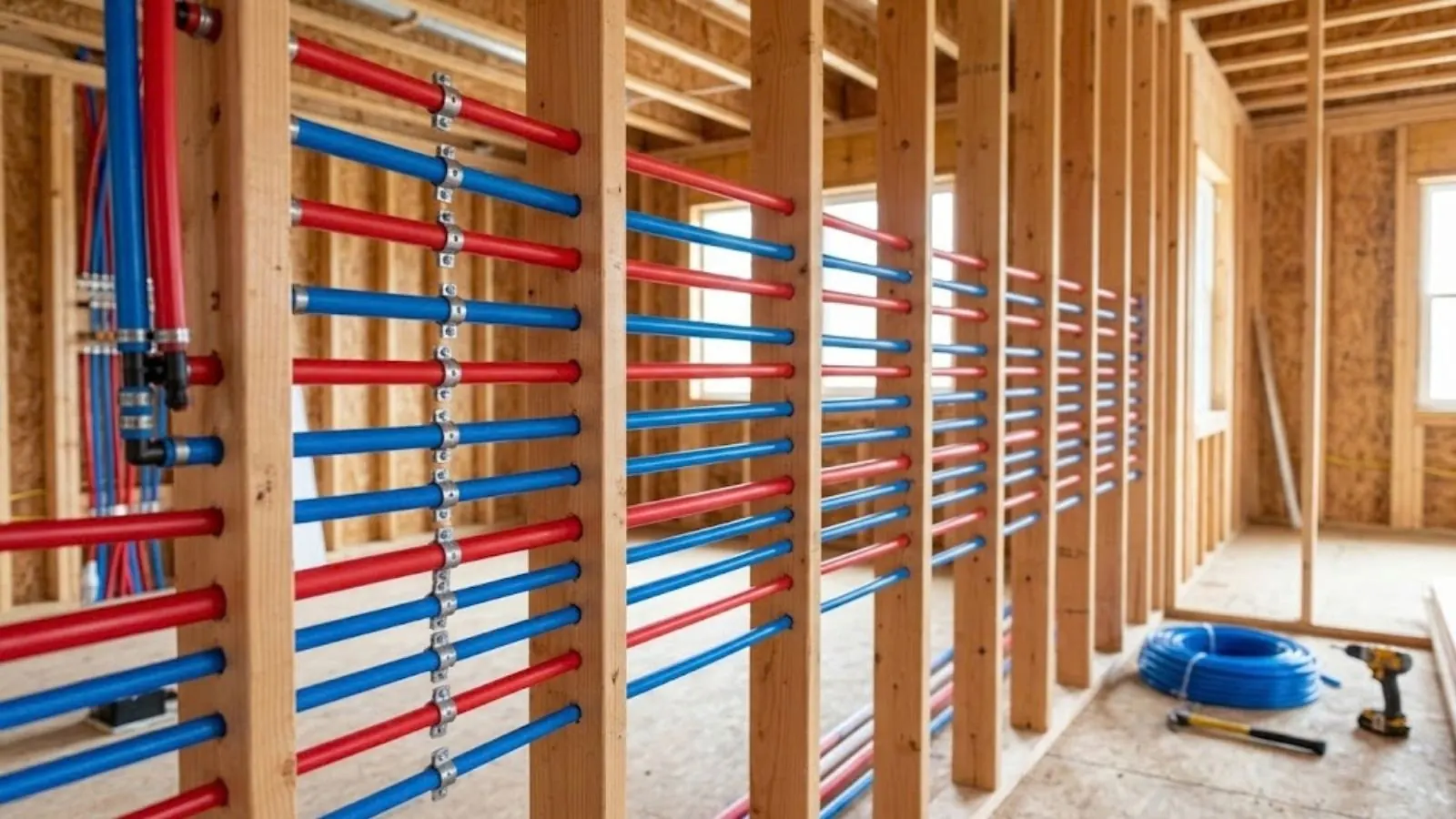
Repiping means replacing the water supply lines in your house, the pipes that carry water to every faucet, shower and appliance. It is a planned project, and most homeowners start thinking about it after a second or third leak in the same system.
We book same-day appointments when available for a walk-through, and you get a clear price before work starts. The goal of that first visit is to decide whether repair or replacement makes sense for your pipes, not to sell a repipe by default.
Drain and sewer lines are a separate system. If your problem is a backup, see sewer line repair instead, because new supply pipes will not fix it.
Rust-colored water, weak pressure and pinhole leaks
Most repipe calls begin with one of three symptoms.
Rusty or brown water
Corroding galvanized steel or old iron sheds rust into the water, especially after the house has been empty or the water has sat overnight.
Pressure that fades
Mineral and rust buildup narrows the inside of old steel pipe until a shower and a dishwasher cannot run together.
Pinhole leaks
Thin copper can pit from the inside and weep at tiny spots. One pinhole is a repair. A string of them is a pattern.
Low pressure is not always the house. Missouri American Water replaced aging mains on McKelvey Road in 2021, and work like that can cause temporary low pressure or discolored water in the area. Before you plan a repipe, ask a neighbor and call the utility at 1-866-430-0820 to rule out a main problem.
Repair a section or replace the whole system?
A repipe is worth it when the pipe is failing everywhere, not just in one spot.
| What we find | Likely path | Why |
|---|---|---|
| One leak in newer copper or PEX | Repair the section | The rest of the system is sound |
| Repeated leaks in the same system | Plan a repipe | Each repair costs access and time, and the next leak is coming |
| Galvanized pipe with low pressure | Replace | The inside diameter is already reduced |
| Water that tests discolored at every tap | Inspect, then likely replace | The source is the pipe, not a single fixture |
PEX or copper: choosing the new pipe
Both materials work in St. Louis County homes. The choice usually comes down to access, budget and preference.
| PEX | Copper | |
|---|---|---|
| Installation | Flexible, fewer fittings, fewer wall openings | Rigid, soldered joints, more openings |
| Freeze tolerance | Expands a little before it splits | Splits more readily when frozen |
| Water chemistry | Not affected by acidic or mineral-heavy water | Can pit with some water conditions |
| Longevity record | Decades of use, newer than copper | A long, well-known record |
| Exposed runs | Needs protection from sunlight | Handles exposure |
We explain which one fits your walls, your budget and your plans. If you are also replacing the water heater, our water heater replacement page explains how that work can be timed with a repipe.
How a repipe is staged, room by room
We plan the job so the house is usable as much as possible.
Walk-through and layout
We trace the existing runs, mark the new routes and decide where each wall opening goes.
Shutoff and protection
We schedule the water shutoff, lay down floor protection and set up a clean work zone.
New lines in, old lines out
New supply lines are run to each fixture, then connected to the main, and the old lines are capped or removed.
Pressure test and flush
We test the system under pressure, flush debris from the lines and check every fixture.
Patch access openings
We close the small openings we made so a drywall finisher can complete the walls.
Drywall, water shutoff and living through it
A repipe requires some wall and ceiling openings, and the number depends on the layout and the pipe type. PEX usually needs fewer and smaller openings than copper. We leave the openings patched, but finish work such as texture and paint is a separate trade.
Water is shut off for part of each work day, and we tell you the plan before we start so you can fill a few containers, run laundry and shower ahead of time. Most repipes take several days, with the exact schedule depending on the size of the house and how many fixtures it has.
Plan to move furniture and wall hangings away from the walls we will open, and tell us about pets and children so we can set up safe work zones.
Permits for water line work in Maryland Heights
The City of Maryland Heights lists repairing or replacing interior or exterior water lines among the jobs where a permit can be pulled without plans. That means a repipe still needs to be permitted, but the paperwork can be simple.
The Community Development building division at (314) 291-6550 has the final word on requirements and inspections, and we handle the permit step when it applies.
What affects the cost of repiping a house
We give a clear price before work starts. These factors move it the most.
House size and fixture count
More bathrooms, kitchens and hose bibs mean more runs and more connections.
Access
An open basement or crawlspace is easier than a finished slab house.
Pipe material
PEX, copper and fittings carry different material costs and labor.
Wall and ceiling finish
Plaster and tile walls need more careful openings than drywall.
Permit and inspection
These add steps to the schedule and are built into the price.
Homeowner insurance often covers sudden water damage from a burst pipe but not the replacement of worn-out pipes themselves. Ask your insurer how a repipe is treated, and call our dispatch line for your real number. If the system has a single failure, burst pipe repair may be the better first step.
Pipe standards and permits for a repipe
Copper tube is made to ASTM B88 and PEX tubing to ASTM F876, and a repipe quote should name the material, the fittings and the pressure rating. Mixing materials without proper transition fittings is a common cause of later leaks.
The City of Maryland Heights allows permits for water lines to be pulled without plans. A whole house repipe needs one, so ask the building division who pulls it and when the inspection happens.
Repiping questions from Maryland Heights homeowners
Scratch a small spot on an exposed pipe with a coin. Galvanized steel is gray and a magnet sticks to it, while copper shows a reddish color and a magnet does not stick. A plumber can confirm it during a walk-through.
It will if the cause is narrowed or corroded supply pipe. If the cause is the utility main, a pressure regulator or a partly closed valve, a repipe will not help, so we check those first.
The city lists replacing interior or exterior water lines among the work where a permit can be pulled without plans. Call the building division at (314) 291-6550 for current requirements, and we handle the permit step.
The water is shut off during parts of the work days, not for the whole project. We give you the schedule before we start, and we restore water at the end of each day where we can.
PEX made for potable water is widely used in homes. We install pipe and fittings rated for drinking water and can show you the markings on the pipe.