
Plumbing installation covers the work that adds or moves something in your house: a new kitchen sink, a second bathroom, a laundry hookup, a basement rough-in. It is planned work, so you pick the day and we plan the visit around it.
We book same-day appointments when available for smaller installs, and larger jobs are scheduled ahead. You get a clear price before work starts, and we tell you if a permit applies.
Kitchen sinks, double-sink drains and dishwashers
A double sink has two bowls that share one trap through a continuous waste tee or a similar fitting. A dishwasher drain usually connects to the disposal or to a high loop under the counter. Getting the slope, the trap arm length and the vent right keeps the sink draining quietly.
When a kitchen is remodeled, the sink often moves a few inches. The City of Maryland Heights says replacing a sink or faucet without relocation does not need a permit, so a swap in the same spot is simple. If the drain is relocated, ask the building division at (314) 291-6550 whether a permit applies.
If you are adding a disposal, see garbage disposal repair and installation for the details specific to that appliance.
Water lines, PEX runs and shutoff valves
New supply lines are sized for the fixtures they serve, with a shutoff valve at each one.
PEX supply runs
Flexible tubing with crimped or expansion fittings is quick to run through framing and reduces the number of joints in walls.
Copper where it makes sense
Exposed or short runs near the water heater often stay copper for durability.
Fixture shutoffs
Every sink and toilet gets its own stop valve, so a future repair does not shut off the whole house.
Main shutoff and pressure
We check the main valve and the incoming pressure, because a valve that will not close fully is a risk during a leak.
If your existing supply lines are corroded, new fixtures will not cure the pressure problem. Repiping replaces the lines behind the walls.
Washing machines, laundry sinks and basement rough-ins
A washer needs two supply valves, a drain standpipe with a trap and a vent, and a pan or a floor drain nearby if it sits on a finished floor. A laundry sink in the basement shares many of those needs.
If you are finishing a basement, plan the rough-in before the walls go up. A bathroom below the sewer line needs a sewage ejector pit and pump, and our sump pump repair page explains how those systems work and fail.
New construction and additions: the rough-in stage
Before the drywall
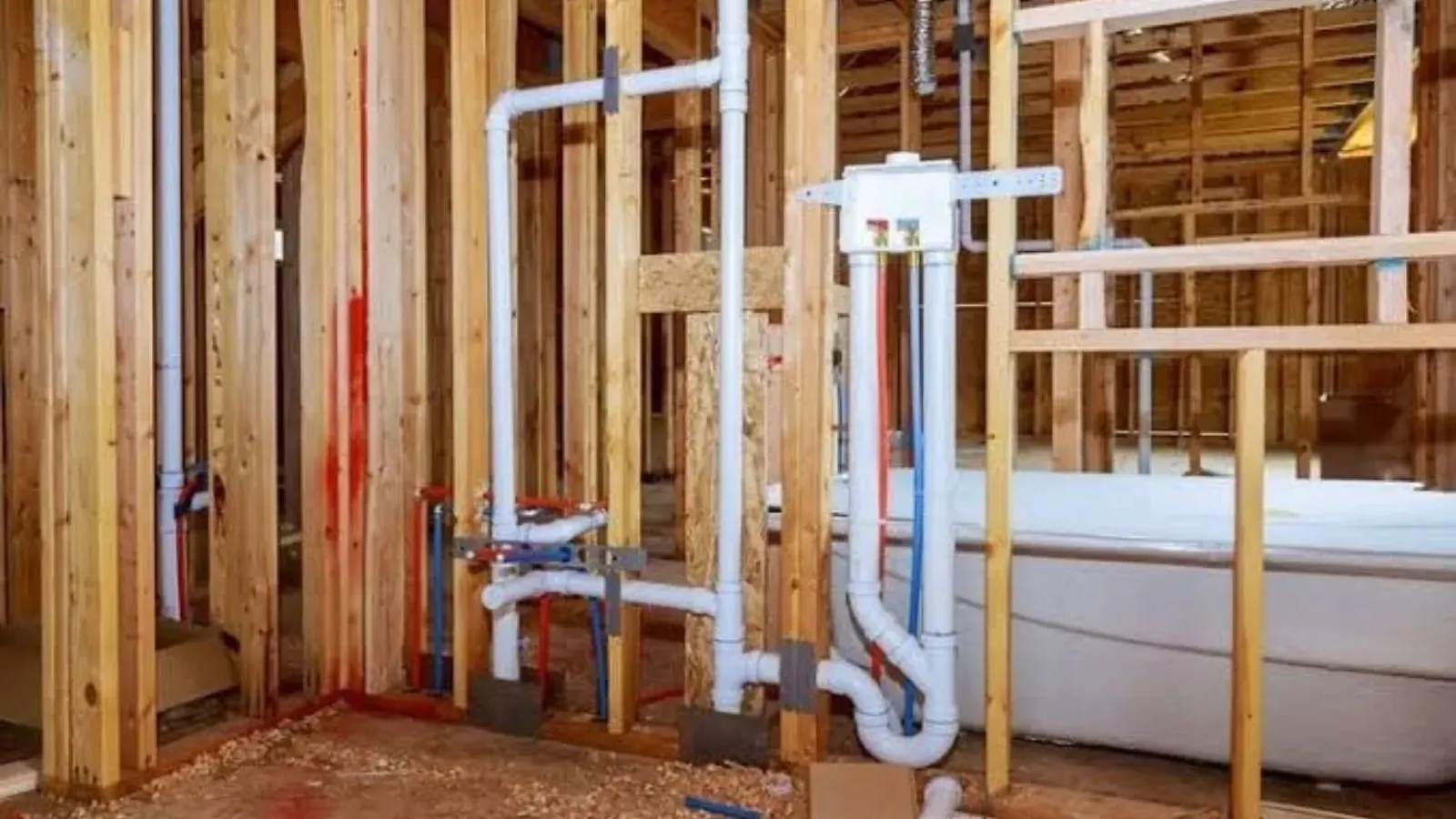
On a new build or an addition, plumbing happens in stages. The rough-in puts drains, vents and supply lines in the framing, and the trim stage sets fixtures after finishes are done.
Rough-in inspections happen before walls close, so schedule a plumber early and coordinate with your builder on the permit and inspection steps. The building division can tell you which inspections apply.
Backflow prevention: install and testing
A backflow preventer stops water from reversing into the public supply. Irrigation systems, fire lines and some commercial lines require one, and many home irrigation systems have one on the line.
The City of Maryland Heights lists installing or replacing backflow devices among jobs where a permit can be pulled without plans, and says repairing a backflow device does not need a permit. Ask the building division about testing requirements for your property.
Businesses with several devices often schedule everything in one visit. See commercial plumbing for that side of the work.
Gas line work: safety comes first
If you smell gas
If you smell gas, leave the building right away and call Spire at (314) 621-6960 or 911 from outside. Do not turn lights on or off, use a phone inside or look for the leak. Call a plumber only after the gas utility or fire department says it is safe.
We do not promise a response time for gas emergencies, because the gas utility and emergency crews come first. For planned gas work such as a new range or dryer line, gas line installation needs a permit and an inspection, and the building division at (314) 291-6550 can tell you what applies.
Repair or install: when does a permit apply?
The City of Maryland Heights publishes a short list on its residential plumbing permits page. This table summarizes it, and the building division has the final word.
| Job | Permit |
|---|---|
| Stopping a leak or clearing a stoppage | No permit needed |
| Replacing a toilet, disposal, dishwasher, sink or faucet without relocating it | No permit needed |
| Replacing a water heater up to 120 gallons | Permit, can be pulled without plans |
| Installing or replacing a backflow device | Permit, can be pulled without plans |
| Repairing or replacing a drain, waste and vent stack | Permit, can be pulled without plans |
| Any sewer lateral, interior or exterior water lines | Permit, can be pulled without plans |
What affects the cost of a plumbing installation
We give a clear price before work starts. These factors move it the most.
Fixture and brand
A basic faucet and a designer fixture take the same time but carry different parts costs.
Relocation
Moving a drain or supply line takes more time than swapping in the same spot.
Access
Open framing is easier than finished walls and tile.
Permits and inspections
They add scheduling steps where they apply.
Materials
PEX, copper, PVC and cast iron each carry different costs and labor.
Insurance rarely pays for upgrades or planned installs, so treat this as a home improvement cost. Call our dispatch line for your real number.
Permits and codes for new plumbing work
The City of Maryland Heights lists stopping a leak or clearing a stoppage as ordinary repair with no permit. Adding or relocating fixtures is not repair, and the building division at (314) 291-6550 decides what the permit needs.
The IPC is a model code, and the city enforces whichever edition it has adopted. Ask the building division which one applies before fixtures are added.
Safety steps before new plumbing work starts
Before the crew arrives
- Locate the main water shutoff and make sure it turns.
- Clear a path to the work area and to the water heater and breaker panel.
- Keep children and pets away from open walls and floors.
- If you smell gas, leave the building and call Spire at (314) 621-6960 or 911 first.
- Ask the building division at (314) 291-6550 whether a permit applies before work begins.
Plumbing installation questions from Maryland Heights homeowners
The City of Maryland Heights says replacing a sink or faucet without relocation does not need a permit. If the plumbing moves, call the building division at (314) 291-6550 to confirm.
Usually yes. The drain needs a continuous waste fitting and the trap arm and vent may need adjusting. We check the existing drain before quoting.
It stops water from flowing backward into the public water supply. Irrigation systems, fire lines and some commercial lines use them, and the building division can tell you what applies to your property.
Gas line work needs a permit and an inspection. Ask the building division what applies, and if you ever smell gas, leave the building and call Spire at (314) 621-6960 or 911 first.
Small installs can often be booked for the same day when available. Larger jobs such as basement bathrooms need a visit first and a scheduled start date.