
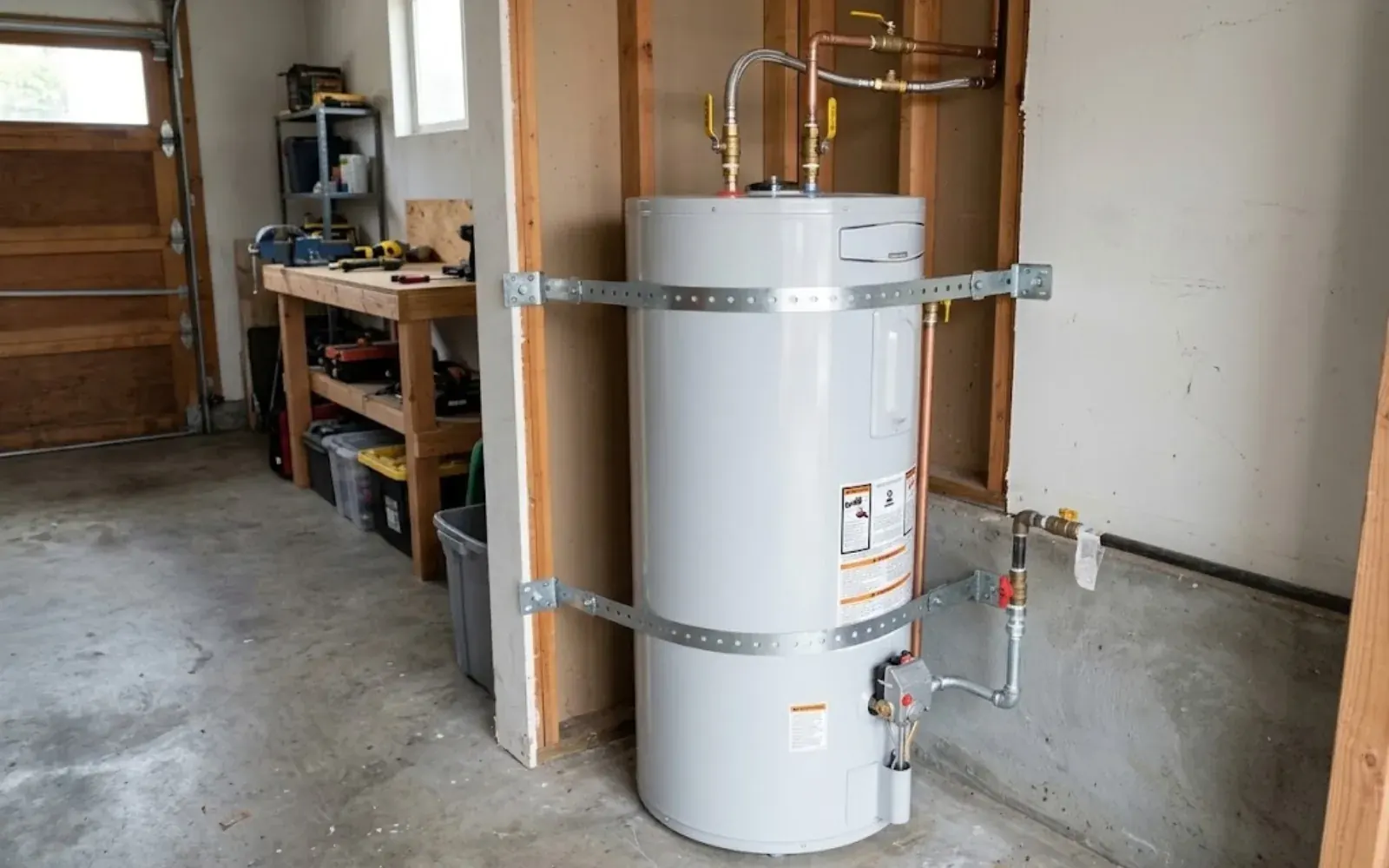
A water heater installation is a planned project, and doing it well takes more than connecting four pipes. The unit has to be sized for the household, vented correctly, protected against pressure and set up so that a future leak does not damage the floor.
We schedule installs for a time that suits you, and same-day appointments are available when the calendar allows. You get a clear price before work starts, and the plumber walks you through each decision before anything is ordered.
What goes into a proper installation
A water heater is a pressurized vessel with fuel or high-amp power attached to it. Each component below has a job.
Shutoff and dielectric fittings
A valve on the cold inlet lets you isolate the tank. Dielectric fittings or flexible connectors guard against corrosion where copper meets steel.
Relief valve and discharge pipe
The temperature and pressure relief valve opens if heat or pressure climbs too high. Its discharge pipe runs to a safe point, and nothing should ever cap it.
Expansion tank
A closed plumbing system has nowhere to send expanding hot water. An expansion tank absorbs it and spares the relief valve and the fixtures.
Drain pan
A pan with a drain line limits damage if the tank leaks, which matters most when the heater sits over finished space.
Venting or electrical supply
Gas units need a flue and combustion air. Electric units need a properly sized circuit and a breaker.
Sediment trap and drain valve
A gas supply line gets a drip leg, and every tank needs a working drain valve so it can be flushed.
Gas or electric: choosing the fuel
The fuel decision depends on what the house already has and what you want to spend over the long run.
| Option | Good fit when | Watch for |
|---|---|---|
| Gas tank | A gas line and a working flue are already in place | Venting condition and combustion air in a tight closet |
| Electric tank | No gas service or no good flue path | Panel capacity and a dedicated circuit |
| Heat pump hybrid | A roomy space with a condensate drain | Clearance, noise and a room that stays above freezing |
| Tankless | Space is tight or hot water demand is high | Gas line size, venting and descaling in hard water |
Our tankless water heater page covers on-demand units in more detail, including what a retrofit usually needs.
Venting and combustion air for gas units
A gas water heater creates carbon monoxide as a normal byproduct, and the flue is what carries it outside. An old flue that has rusted, sagged or lost its slope can spill exhaust into the house, so the plumber inspects it before connecting a new burner.
Combustion air matters too. A heater in a sealed closet or a tight utility room needs a supply of fresh air, and the plumber checks that before leaving.
If you smell gas at any time, leave the building and call Spire at (314) 621-6960 or 911 before you call a plumber.
Relocating a water heater
Homeowners sometimes move a heater from a basement closet to a garage or a utility room, or into a more accessible spot during a remodel. A move means new supply lines, a new vent path or electrical run and often a new drain pan and discharge route.
Tell the dispatcher where the unit is now and where you want it, and we price the move separately from the heater so you can see what the relocation adds.
Permits in Maryland Heights
Water heaters up to 120 gallons
The City of Maryland Heights residential plumbing permits page says permits can be pulled without plans for replacing water heaters up to 120 gallons. That makes a typical residential install a simple permit item compared with a job that needs drawings.
The Community Development building division at (314) 291-6550 can tell you what applies to a new installation or a move. If a permit is needed, we explain the step before the work is scheduled.
A planned install can be timed around the permit and inspection. That is one more reason to install before the old tank leaks, and our water heater replacement page covers the emergency version.
Hard water and your new tank
Missouri American Water's 2021 report for its St. Louis County system shows total hardness at its Missouri River plants between 76 and 170 ppm as calcium carbonate. Water in that range builds scale on elements and sediment on tank bottoms over time.
A new tank benefits from a yearly flush and a check of the anode rod. If you want to test your tap, the result tells you whether a water softener is worth considering for the whole house.
Scheduling a planned installation
Booking ahead takes the pressure out of the project.
Call and describe the current setup
Tell us the fuel type, tank size, location and any issues such as poor venting or a cramped closet.
Choose the unit and the size
We talk through options and help you decide between tank, hybrid and tankless.
Set the day and confirm the price
You get a clear price before work starts. The permit step is part of the discussion if it applies.
Install and test
The plumber sets the unit, connects the safety devices and tests for leaks and venting before leaving.
What affects the price of an installation
Unit type
A tank, a heat pump hybrid and a tankless unit have very different equipment costs.
Venting and gas work
Flue replacement and gas line changes add materials and time.
Code components
Expansion tank, pan, discharge line and shutoffs change the total.
Relocation
Moving a heater means new pipe runs and sometimes new electrical or gas lines.
Access
A tight attic or crawlspace takes longer than an open basement.
For a real number on your install, call the dispatch line and describe the space. We also serve Chesterfield and nearby ZIP codes for planned installs.
Code points that shape a new installation
Gas storage water heaters are built to the ANSI Z21.10.1 standard, and the installation instructions that come with the tank are part of how an inspector judges the work. Clearances, venting, a drain pan where required and a relief valve discharge pipe are the items that most often decide whether an install passes.
Model codes such as the IPC set the baseline, and Maryland Heights enforces its own adopted edition. A quick call to the building division before the tank arrives avoids a failed inspection.
Water heater installation questions
Call as soon as you decide, since same-day appointments are offered when available and we can often fit a planned install within days. Booking ahead gives you more choice of unit and time.
Many homes with a closed plumbing system do, especially when a pressure regulating valve or backflow device is installed. The plumber checks your water pressure and explains whether one is needed.
The city says a permit can be pulled without plans for replacing water heaters up to 120 gallons. Call the building division at (314) 291-6550 and ask what applies to your project.
Often yes. A move adds new piping, venting or electrical work, and we price it separately so you can compare.
It depends on your house. Gas is common where a good flue exists, and electric works where gas is not available. The plumber explains the trade-offs for your space.