
If water is spraying, pooling or soaking a wall, treat it as an emergency leak call. Shut off the main water valve, switch off power to the wet area and call our 24/7 line, which is answered around the clock. We book same-day appointments when available across Maryland Heights.
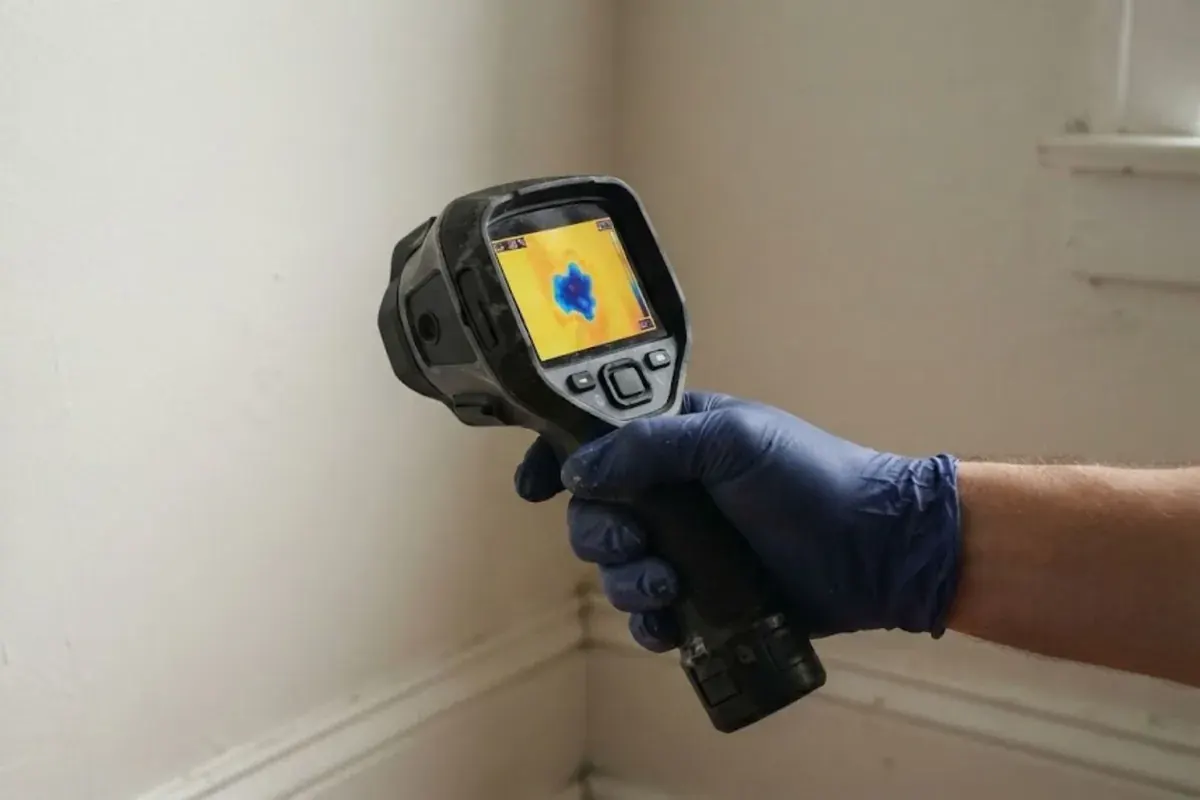
When the leak is hidden, the next step is finding it without tearing out half the house. Leak detection uses listening gear, thermal imaging and pressure tests to narrow the location to a small area before any cutting starts.
Many callers do not know where the water is going, only that something is wrong. That is exactly what we diagnose, and the symptoms below are how most of these calls begin.
Water meter still running with everything off
A meter that keeps moving when every faucet, toilet and appliance is off is the clearest sign of a leak somewhere on your side of the meter. The leak can be in a supply line, a running toilet, a water heater connection or a buried pipe between the meter and the house.
We start by confirming that the leak is on your property and not at the utility connection. Then we isolate sections of pipe with shutoff valves until the meter stops, which narrows the search to one run of pipe.
Water bill jumped and nobody knows why
A sudden high bill is a common reason people call. This simple test costs nothing and tells you whether a leak is likely.
Shut off every use
Turn off all faucets, the dishwasher, the washing machine and the ice maker. Do not flush any toilet during the test.
Read the meter
Open the meter lid and note the reading or watch the small leak indicator, which spins when water moves.
Wait 15 minutes
Leave everything off, then read the meter again. A changed reading with nothing in use means water is escaping.
Check the toilets
A few drops of food coloring in each tank, left for 15 minutes, show whether a flapper is leaking into the bowl.
Call for a second opinion
Missouri American Water at 1-866-430-0820 can discuss the meter and the bill. If the meter is moving, call us for the pinpoint.
A billing spike does not always mean a leak. A new appliance, a filling pool or heavy irrigation can do the same thing, so we check the obvious causes before bringing in equipment.
Warm spot or wet floor: slab leaks
A warm patch on the floor, a hot water bill that climbs or the sound of running water at night can point to a leak in a pipe under a concrete slab. Hot lines often leak first, because heat and expansion stress the metal.
We do not maintain a separate slab leak page, because the method is the same as any buried leak. Acoustic listening finds the sound, and thermal imaging shows the warm path. Once the spot is marked, you decide whether to repair the line in place or reroute it above the slab, and our repiping options are on their own page.
Ceiling and wall stains
A brown ring on a ceiling or a bubbled patch on drywall means water is traveling. The stain is often not where the leak is, because water runs along framing and pipes before it drips.
A moisture meter and thermal camera show where the wet material starts. We trace upstream to the fixture, the supply line or the drain that is wet, and we confirm the repair by checking the area again. Bathroom leaks can come from a failed shower valve, which is covered on our faucet repair page.
Crawlspace and under-floor leaks
Houses with a crawlspace or an unfinished basement can leak for months before the damp smell appears. Water pools on the ground, wicks into insulation and rots the subfloor above.
We look at the pipes where they run, and we check for slow drips at joints, valves and drain connections. An open crawlspace makes the repair faster than a hidden wall, which is one reason to schedule a check as soon as you notice the smell.
Buried lines, yard leaks and meter boxes
A wet patch in the yard, a lawn that stays green in a dry week or a meter box that fills with water can point to a leak in the water line from the meter to the house. We use line locators and acoustic gear to trace the pipe and listen at points along it.
Sprinkler systems add another source. A stuck valve, a broken head or a cracked lateral can add hundreds of gallons a day without any sign inside the house, so we check the irrigation zones as part of a high-bill call. If the service line is the problem, the next page to read is water line repair.
How we pinpoint a leak
No single tool finds every leak, so the right method depends on the symptom.
| Method | What it finds | Limit |
|---|---|---|
| Acoustic listening | The sound of pressurized water escaping | Weaker on plastic pipe and in noisy areas |
| Thermal imaging | Warm paths from hot water leaks and wet materials | Needs a temperature difference to show |
| Pressure testing | Whether a section of pipe holds pressure | Tells you if, not where |
| Tracer gas | Small leaks in lines that other tools miss | Used when listening is inconclusive |
| Line locating | The path of a buried pipe | Marks the route, not the leak |
We pick the least invasive method first and add tools until the leak is located. That keeps the repair area as small as possible.
When a leak cannot wait: what to do right now
While you wait for the plumber
- Shut off the main water valve where the line enters the house.
- Turn off power to any wet room, and never touch wet outlets.
- Open a low faucet to drain the pipes if water is still spraying.
- Move belongings out of the wet area and photograph the damage.
- Do not cut into walls or floors yourself, because that makes the search harder.
The City of Maryland Heights lists stopping leaks as ordinary repair that does not need a permit. Larger changes such as replacing interior or exterior water lines are different, so ask the building division at (314) 291-6550.
Commercial leak detection
Offices, restaurants and hotels around Westport Plaza and Riverport have larger pipe systems, and a leak can run for days before anyone notices. We schedule after-hours leak detection so the business keeps operating, and our commercial plumbing page explains how that work is planned.
What affects the price of leak detection
Number of suspect areas
A single wet wall is a smaller search than a whole house with a running meter.
Pipe material
Plastic and copper behave differently under listening gear.
Access
A slab, a finished ceiling and a crawlspace each add time.
Methods needed
Acoustic listening alone costs less than a combined method with tracer gas.
After-hours timing
Night and weekend dispatch is priced differently from a weekday visit.
Homeowner policies may cover sudden water damage but often exclude the cost of finding the leak, so ask your insurer. For your own number, call the dispatch line.
Standards for finding and documenting a leak
Pressure testing, acoustic listening and thermal imaging are the accepted methods for locating a hidden leak, and a written record of the method and readings helps with an insurance claim. Ask your insurer what documentation it wants, because policies differ on sudden leaks versus long-term seepage.
The City of Maryland Heights lists stopping leaks as ordinary repair that needs no permit. Replacing interior or exterior water lines is different, and the building division can confirm what applies.
Leak detection questions from Maryland Heights homeowners
Yes. An active leak soaking drywall or running up the water bill does not keep office hours, and neither does the 24/7 line. We can often locate the source the same day when a crew is free, and we quote the price once we know whether the leak is in the wall, the slab or the yard.
Turn off every water use, read the meter, wait 15 minutes without using water and read it again. If the reading changes, water is escaping. Call us for a pinpoint.
We listen for the sound of water escaping, scan for warm paths with thermal imaging and pressure test sections of pipe. The method narrows the spot before any concrete is cut.
Usually the tools show where to cut, and the opening is small. We confirm the location with a moisture meter before touching the drywall.
No. A toilet flapper, an irrigation zone or a new appliance can cause one. We check the simple causes first, then use equipment if the meter is still moving.
Yes. Call the same 24/7 line and we coordinate access and explain findings so the owner can decide on repairs.