
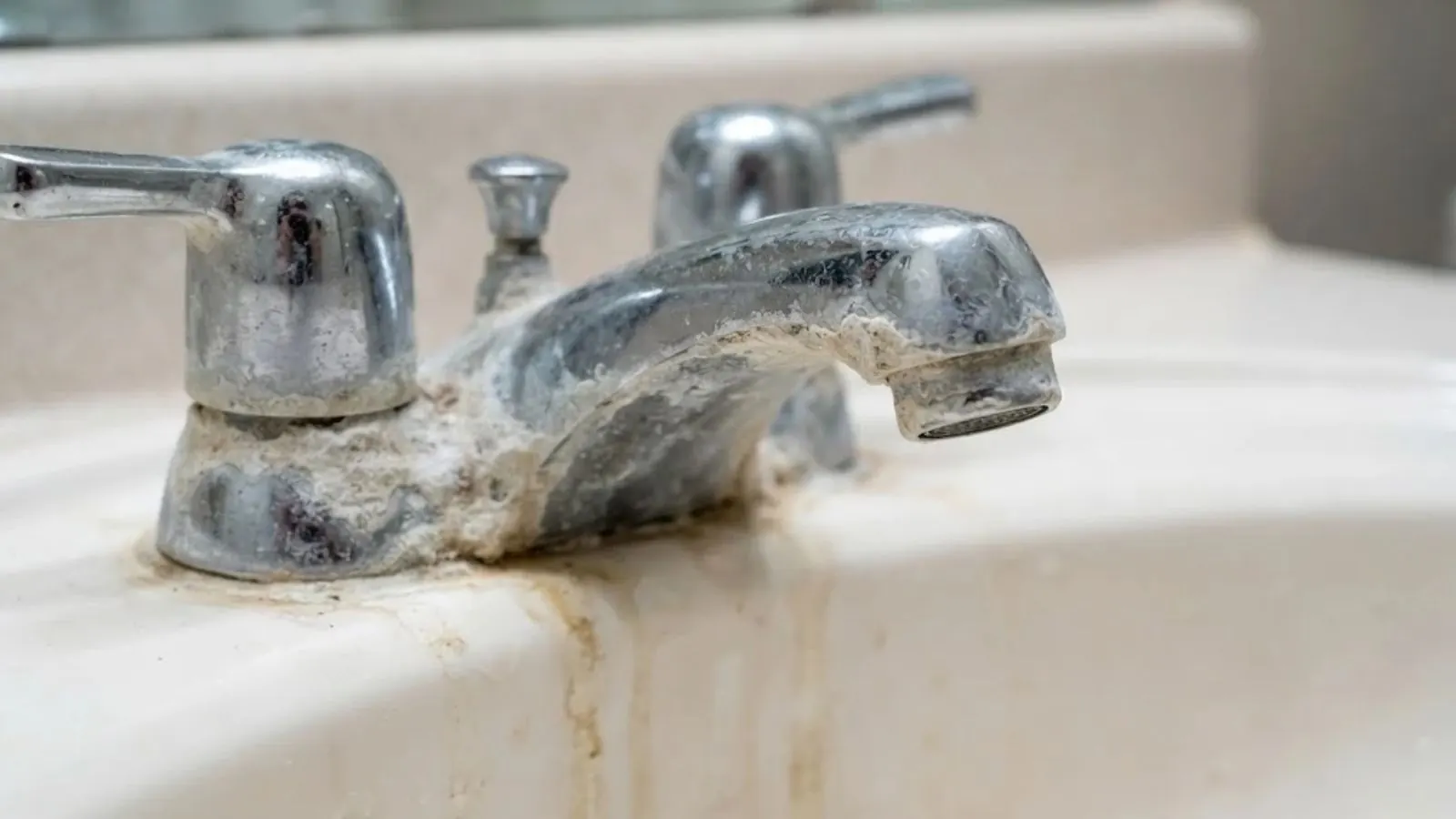
Missouri American Water's 2021 water quality report for its St. Louis County system lists total hardness of 76 to 170 ppm as calcium carbonate at its Missouri River plants. That works out to about 4.4 to 9.9 grains per gallon, using the standard conversion of 17.1 ppm per grain. Meramec River water is listed at 66 to 148 ppm.
Those numbers describe the treated water at the plant, not what comes out of your tap on a given day. Blending, distance and time of year change what reaches a house, which is why testing your own tap is the only way to know.
This guide explains what the report says, what hardness does inside your plumbing and how to decide between a softener, a filter or doing nothing.
What the 2021 report lists
The report covers the utility's St. Louis County and St. Charles County system. About 80 percent of its water comes from the Missouri River and about 20 percent from the Meramec.
| Source | Total hardness (ppm as calcium carbonate) | Approximate grains per gallon |
|---|---|---|
| Missouri River plants | 76 to 170 | About 4.4 to 9.9 |
| Meramec River plant | 66 to 148 | About 3.9 to 8.7 |
The report also describes lime softening as part of treatment and chloramine as the disinfectant. Ask the utility for its latest annual report, because the figures change from year to year.
What hardness does inside your house
Sediment in the water heater
Minerals settle at the bottom of a tank and coat heating elements and burner surfaces. That is why heaters are flushed and why elements fail.
Scale on fixtures
White crust builds on aerators, showerheads and faucet spouts and reduces flow over time.
Spots on glass and tile
Dried water leaves a mineral film that soap does not rinse away completely.
Scale inside tankless heat exchangers
Tankless units are sensitive to scale, which is why flushing matters. See water heater repair for what failing elements look like.
Chloramine is a separate question
The utility uses chloramine as its disinfectant, and a standard salt-based softener does not remove it. If your concern is taste or smell rather than scale, a filter designed for chloramine is a different product from a softener.
Many homes end up wanting one or the other, and a few want both. The table below shows how to sort out which problem you actually have.
Softener, filter or neither?
| Your complaint | Likely fit | Why |
|---|---|---|
| White crust on faucets and showerheads | Softener | It removes the minerals that form scale |
| Spots on dishes and glass | Softener | Removes hardness minerals |
| Chlorine or chloramine taste and smell | Filter | A softener does not remove disinfectants |
| Heater element failures and tank sediment | Softener, plus regular flushing | Less scale reaches the heater |
| No visible scale and no complaints | Neither | A test may show your tap is milder than the plant range |
If the table points to a softener, our water softener installation page covers what the install involves, from bypass valves to the drain line.
How to test your tap
Pick a cold tap
Use a cold kitchen tap that has not been run for an hour, and let it flow for a minute.
Test the water
Use a hardness test kit from a hardware store, or send a sample to a certified lab.
Test a second tap
Check a tap at the far end of the house to see whether the number changes.
Compare with the utility's report
If your result is far from the report, ask the utility why. It may be a blending difference or a private plumbing issue.
What a softener does and does not change
A softener swaps calcium and magnesium for sodium or potassium as water passes through resin beads. The beads are recharged with salt and rinsed to a drain, so the unit needs a nearby drain and a place for salt. Soft water feels slick and lathers more, and many owners notice less soap use.
It does not filter chlorine or chloramine and does not make water safer to drink. It also adds a small amount of sodium, so people on restricted diets should ask a doctor. A plumber can set a bypass so one outdoor tap stays unsoftened for the lawn.
Heaters last longer with less scale, but sediment already in the tank still needs to be flushed out. If your heater is old, our water heater replacement page explains when flushing stops being worth the effort.
Maryland Heights local note: where your water comes from
The City of Maryland Heights lists Missouri American Water as the water provider, with customer service at 1-866-430-0820. The utility replaced aging mains in nearby areas in 2021, and it warned that temporary discolored water and low pressure can follow that kind of work. If cloudy or brown water appears after main work on your street, run the cold tap for a few minutes before assuming a household problem.
Nearby towns may use different utilities. If you live in Creve Coeur or Bridgeton, check your own water bill for the provider before relying on these figures.
Sources: Missouri American Water 2021 water quality report for its St. Louis County system and 2021 project notices (primary, utility), and City of Maryland Heights utilities page (primary, municipal).
Safety notes before you buy a softener
Things to confirm
- Test your own tap, because the utility figures are system averages.
- Ask your doctor if anyone in the house is on a sodium restricted diet, since softening adds sodium.
- Keep a separate unsoftened tap for drinking if that is advised.
- Ask the building division which drain and backflow rules apply to the softener discharge.
Hard water questions
The utility's 2021 report for its St. Louis County system lists total hardness of 76 to 170 ppm at its Missouri River plants, about 4.4 to 9.9 grains per gallon. Test your own tap to see your exact number.
No. A salt-based softener removes hardness minerals. Chloramine is handled by a different kind of filter.
It can. Minerals settle in the tank and coat elements and burner surfaces, so flushing the tank and replacing the anode rod on schedule helps.
A plumber can set a schedule after you test your tap. Hard water builds sediment faster, so many owners flush every year.
Missouri American Water publishes an annual report for its St. Louis County system, and its customer service line is 1-866-430-0820. Ask for the latest edition, since the figures change.