
The cost of hydro jetting a sewer line depends mainly on how long the line is, how easy it is to reach, what is blocking it and whether a camera is needed before or after. A short, grease-coated kitchen line with a good cleanout is a small job. A long main line with roots and no cleanout is a bigger one.
No honest plumber can give you a firm total without hearing the symptoms, and that is why we do not post a price list. What we can do is explain every factor so you understand the quote you are given, and give you a clear price before work starts.
Below is the list of what drives the number, how to tell which kind of clog you have and when jetting is the wrong tool altogether.
What a hydro jetting visit includes
A hydro jet sends high-pressure water through a hose and a nozzle that points water backward and forward. The backward jets pull the hose up the pipe, and the forward jet breaks up the blockage ahead. The water scours the pipe wall all the way around, which a cable cannot do.
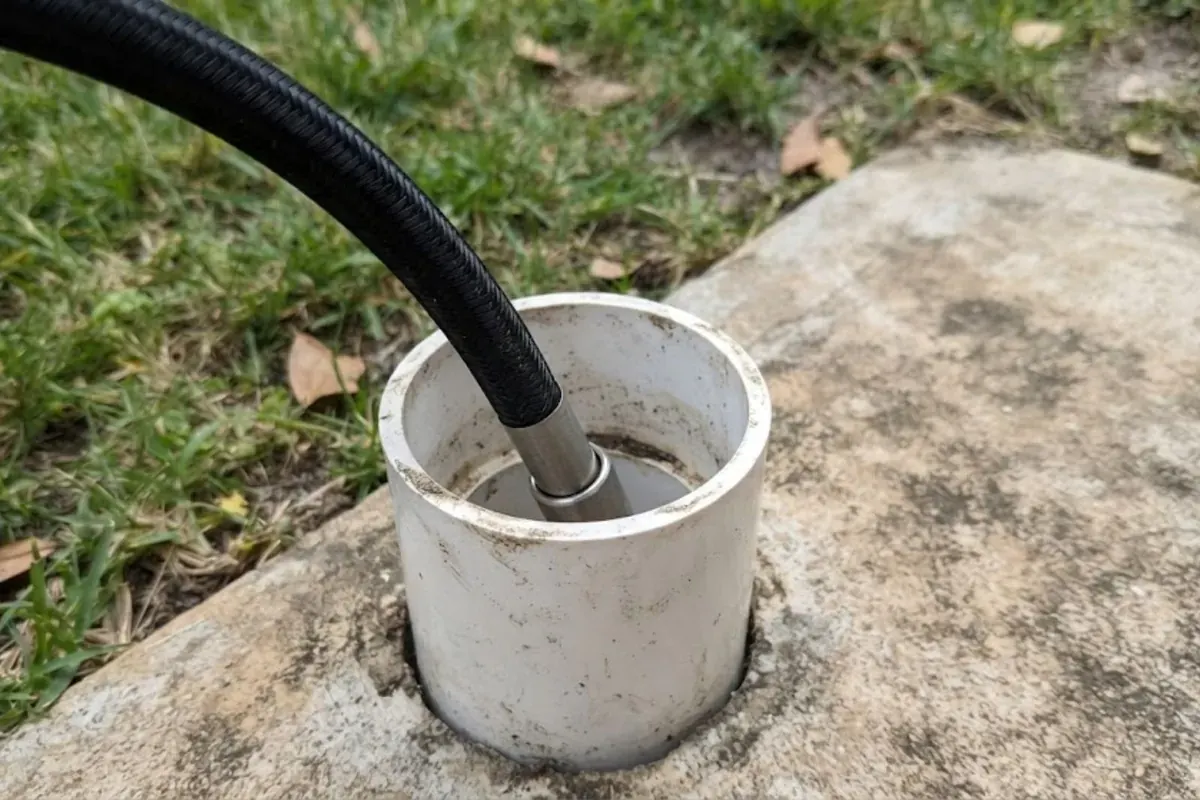
The plumber sets up at a cleanout, runs the hose to the problem, then pulls it back while the jets clean the wall. A camera is often used afterward to confirm the pipe is clear and to look for damage that the cleaning exposed.
Our hydro jetting page covers the method in more detail. This article focuses on what you pay for and why it varies.
Five factors that set the price
These are the questions a plumber asks before quoting. They are also the questions you can ask any company.
| Factor | Pushes the cost up when | Keeps it down when |
|---|---|---|
| Line length and size | The blockage is far from the cleanout or the pipe is large | The clog is near an access point on a standard line |
| Access | There is no cleanout and a toilet must be pulled | An outdoor cleanout is easy to reach |
| What is in the pipe | Heavy grease, scale or thick roots need several passes | A light buildup clears in one pass |
| Camera work | A full inspection or a recording is requested | A quick look confirms the line is open |
| Timing | The call is at night or on a weekend or holiday | The job is booked on a regular weekday |
Ask which of these your quote includes. A price that covers the camera and a second pass is not comparable to a price that does not.
Grease, roots or scale: why the blockage type matters
Grease is the simplest job for a jet. It softens and washes away, and the pipe wall comes clean. Scale and mineral buildup on older metal pipe is tougher, and the jet may need a specialty nozzle and more time.
Roots are the variable. A jet with a cutting nozzle can clear fine roots, but a thick root mass in a cracked pipe will grow back. In that case a quote for jetting alone is a quote for a repeat visit, and the better question is whether the pipe needs a camera inspection and a spot repair.
When jetting is the wrong tool
Do not jet these without a camera first
- A pipe that is cracked, offset or collapsed. High pressure water can force debris through a break or make a void worse.
- A line with a belly that holds standing water. Jetting clears the clog, but the water will pool again until the pipe is regraded or relined.
- A very old clay or fiber pipe in poor condition. A gentler method may be safer.
- A blockage that is a solid object such as a toy or a broken fitting. A cable with a retrieval head or a small excavation may be needed.
A plumber who recommends jetting without looking at the pipe first is guessing. A camera pass before the jet costs a little more, and it protects you from paying for a clean pipe that is still broken.
Does homeowner insurance cover sewer line cleaning?
Most homeowner policies cover sudden damage but exclude wear, roots and gradual deterioration. Jetting to clear a clog is maintenance, and it is rarely covered. If a backup damaged your floors, drywall or belongings, ask your insurer whether a sewer backup endorsement applies.
Keep photos, a written description of the problem and any camera recording. If the backup is tied to a cracked lateral, the same footage can support a city repair claim, which is covered in the local note below.
Maryland Heights local note: who owns the lateral
The City of Maryland Heights states that the sewer lateral, the pipe from your house to the sewer main, is owned by the homeowner. The city runs a lateral repair program funded by an annual fee on residential properties with six or fewer dwellings. For approved repairs, the city pays 100 percent up to $10,000 and 50 percent of the cost above that.
The program is for repairs, not routine cleaning, so jetting for a clog is normally your own cost. If a camera shows that the clog is a broken or collapsed lateral, ask Public Works at (314) 291-6550 for the Sewer Lateral Claim Form before you pay for a repair, and keep the camera footage.
Source: City of Maryland Heights, sewer lateral program page (city government, Public Works).
How to get a clear price before work starts
Use this short sequence with any company, including us.
Describe the symptom
Say which fixtures are slow, whether sewage has backed up and how long it has been going on.
Ask what is included
Confirm whether the camera, the cleanout access and a second pass are part of the number.
Ask about conditions
Ask what would change the price, such as a collapsed pipe or a missing cleanout.
Get it in writing
A text or written quote before the hose goes in the pipe protects both sides.
If you are in nearby Hazelwood or Bridgeton, the same questions apply, and our dispatcher can talk through your layout over the phone.
Hydro jetting cost questions
The price depends on line length, access, what is in the pipe and whether a camera is needed. A dispatcher can give you the factors and a clear price before work starts once the symptoms are known.
For grease and scale it often is, because it cleans the whole pipe wall. For a single clog from paper or a small root, a cable may do the job for less.
There is no single schedule. A camera inspection shows how fast buildup returns, and that tells you whether yearly, occasional or one-time cleaning makes sense.
On a sound pipe it is safe. On a cracked, collapsed or very old pipe, a camera check first is the safe approach.
The city program covers approved lateral repairs, not routine cleaning. Ask Public Works at (314) 291-6550 how your situation would be handled.