
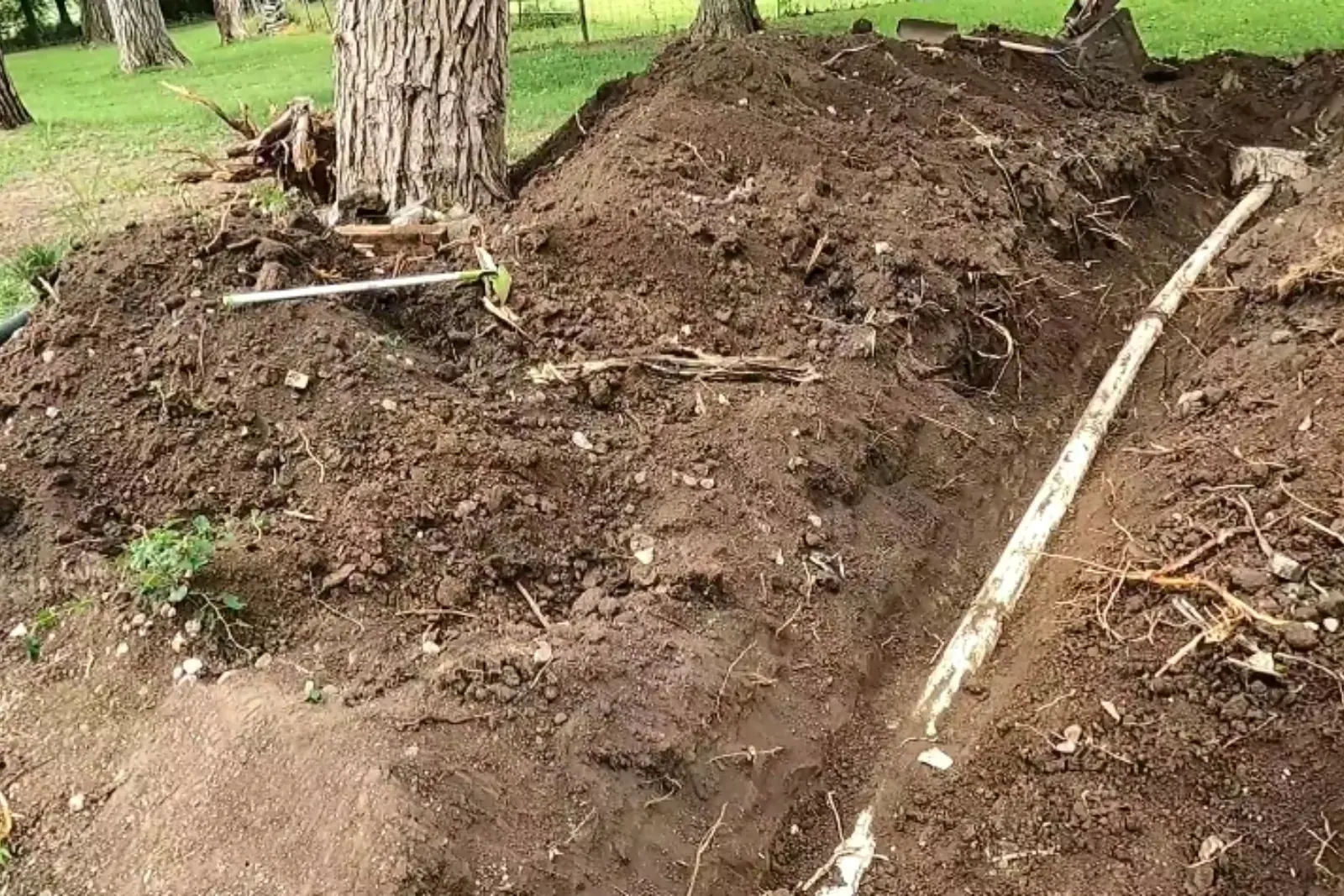
The sewer lateral is the pipe that carries waste from your house to the main under the street. According to the City of Maryland Heights, it is privately owned by the homeowner. A break or root blockage in that pipe is therefore your repair, even when the main in the street is public.
The city softens the blow with a lateral repair program funded by an annual fee on residential properties with six or fewer dwellings. It pays for approved repairs up to a limit, so it is worth understanding before a backup happens.
This guide explains who owns what, how the program works and what to do in the first hours after sewage backs up.
What the lateral is and where it ends
The lateral runs from the house cleanout or foundation wall out to the sewer main, usually under the yard and sometimes under the sidewalk or street edge. Older clay and cast iron laterals are prone to cracks and root entry, and the city's program exists because those failures are common.
The public main belongs to the sewer district. The sewer district, MSD, can be reached at (314) 768-6260 for main line issues, but the city sends lateral questions to Public Works. If you are not sure where your line ends, a camera inspection shows the path and the connection point.
How the city repair program works
These are the details the city publishes about its lateral repair program.
| Item | What the city says |
|---|---|
| Who owns the lateral | The homeowner |
| Annual fee | $28 approved by voters in 1999, raised to $50 by Prop S on April 8, 2014 |
| Who pays the fee | Residential properties with six or fewer dwellings |
| What the city pays | 100 percent of an approved repair up to $10,000, and 50 percent of the cost above that |
| How to apply | Submit the Sewer Lateral Claim Form to Public Works at (314) 291-6550 |
| Track record | More than 700 residents have had repairs since 2000 |
The city's page also says most repairs cost at least $3,000 and complicated ones can exceed $10,000, and that most homeowner insurance does not cover lateral repair. A sewer line repair estimate that comes with camera footage gives you what you need for the claim.
What a camera shows that a clog call does not
Roots
Fine roots in a joint look like hair. A mass of them in a clay joint means the lateral is open to the soil.
A belly or sag
A low spot holds water and waste, so clogs return even after cleaning.
An offset or cracked joint
A misaligned joint snags paper and lets soil in.
Collapse
A broken pipe is a repair or replacement and usually qualifies for the program.
A sewer camera inspection gives you a recording and a location, which makes it easier to describe the failure in a claim.
What to do in the first hours after a sewer backup
Stop using water
Do not flush, run the dishwasher or start a washing machine until the line is cleared.
Keep people and pets away
Sewage carries bacteria. Keep children out of the affected room and wear gloves and boots if you must enter.
Call a plumber and clear the line
A cable or jetter can restore flow, and a camera afterward tells you whether the lateral is failing.
Document the damage
Photograph the area and the cleanup for your insurer, even if lateral repair is excluded.
Ask about the claim
If the camera shows a broken lateral, contact Public Works about the Sewer Lateral Claim Form.
Other cities run their programs differently
A neighbor in a different city may have a different deal. Chesterfield, for example, has a program that covers certain repairs up to $15,000, charges a $200 non-refundable application fee and requires a licensed plumber to cable the line first.
Rules also differ across the county line. A home served from our western service area may sit in a different county, so check with your own city before assuming Maryland Heights terms apply. Our service area page lists every town we cover.
Paperwork to gather before you file a claim
Claim file checklist
- The camera recording and a note of the footage depth where the damage appears.
- The plumber's written findings, including the pipe material and the type of failure.
- Photos of any backup damage inside the house.
- Your property address and proof that you own the home.
- The completed Sewer Lateral Claim Form from the city.
Keep copies of everything. If the city asks for more detail, a clear recording and a written report answer most questions the first time, and a sewer line cleaning record shows what was done before the camera went in.
Maryland Heights local note: who to call
Public Works handles lateral questions at (314) 291-6550 and is open Monday to Friday, 7:00 to 5:30, at the Government Center, 11911 Dorsett Road. After hours, the city's number is (314) 298-8700. The city maintains public streets and city storm sewers, but not your lateral.
State law bars the city from using general funds for lateral repairs, so the annual fee is the program's only funding source. The city also notes that operating costs have exceeded fee revenue since 2009, which is a good reason to apply early and keep your documentation complete.
Sources: City of Maryland Heights Sewer Lateral Program page and Public Works contacts (primary, municipal), and the City of Chesterfield Sewer Lateral Repair Program page (primary, municipal).
Sewer lateral questions
In Maryland Heights it belongs to the homeowner, according to the city. The city's repair program helps with approved repairs.
It pays 100 percent of an approved repair up to $10,000 and 50 percent of the cost above that.
The city says most homeowner policies do not cover lateral repair. Ask your insurer, because some offer optional endorsements.
MSD, the sewer district, handles the public main at (314) 768-6260. Your plumber can tell you if the blockage is in your lateral or the main.
Public Works lists it on the city's sewer lateral program page, and you can call (314) 291-6550 for help. Bring the camera footage and the plumber's written findings.