
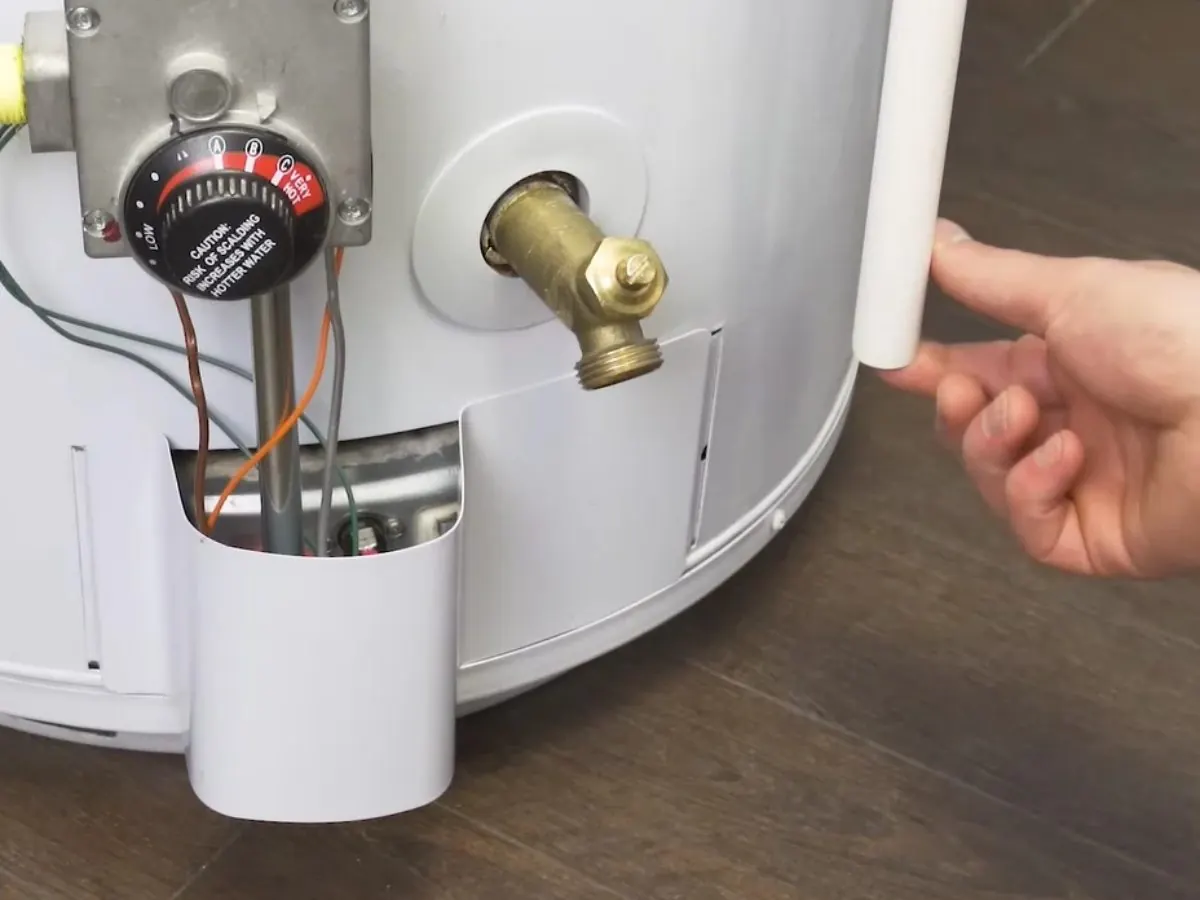
A temperature and pressure relief valve, often called a TPR valve, opens when the tank gets too hot or the pressure climbs too high, and it lets water out through a discharge pipe before the tank can fail. Replacing one is a small job in most homes, and the cost depends on the valve, the access and what else is wrong with the system.
A valve that drips constantly, a valve that has never been tested and a valve that is stuck are all reasons to look at it. The valve itself is not the only thing to check, because a leaking valve is often a symptom of thermal expansion or high supply pressure.
This guide explains what the valve does, how to test it safely, what moves the replacement price and when the valve means the whole tank should be replaced.
What the TPR valve does and why it must never be capped
Water expands as it heats, and a sealed tank has no room for that expansion. The relief valve is the release point. Most TPR valves are rated to open at a set pressure and a set temperature, and the ratings are stamped on the valve body, so check the label on yours.
The valve connects to a discharge pipe that runs downward and ends near the floor or a drain. That pipe must not be capped, plugged, threaded at the end or run uphill. A capped discharge defeats the valve, and a tank with no working relief is a serious hazard.
Signs the valve needs attention
These are worth a call
- Water dripping steadily from the discharge pipe.
- A hissing or sizzling sound from the valve area.
- Mineral crust or corrosion around the valve body.
- A valve that has been installed for many years and has never been operated.
- A lever that will not move or a valve that will not reseat after lifting the lever.
A valve that drips only when the heater is firing may be doing its job. If it drips all the time, the cause is either a worn valve or pressure that is too high for the system.
How to test the valve safely
Test only if the discharge pipe is in good shape and you can direct the water to a bucket or drain. The water can be hot.
Check the discharge pipe
Confirm it points down and ends in a safe spot. Place a bucket under the end.
Lift the lever briefly
Raise the lever for a second or two, then let it snap back. A short burst of water should flow and stop.
Watch for a drip
If the valve drips after you release the lever, it did not reseat and needs replacement.
Stop if it will not move
A stuck lever is not a reason to force it. Call a plumber.
Do not test a valve that is leaking badly, and never open one with the heater running hot if you are unsure of the discharge. If the water pressure in your house is high, the valve may open often even when it is healthy.
What drives the replacement cost
There are no dollar figures here because the numbers depend on the home. These are the factors that move the quote.
| Factor | Raises the cost | Keeps it low |
|---|---|---|
| Valve type and rating | A special rating or a long-shank valve | A standard valve that matches the tank |
| Access | The heater is tucked in a closet or a crawlspace | The valve is easy to reach with space to work |
| Discharge pipe | The pipe is corroded, capped or runs uphill and must be rebuilt | The pipe is in good shape and routes correctly |
| Draining the tank | The tank must be partly drained or the water must be shut down | The valve can be swapped with little drainage |
| Related fixes | An expansion tank or a pressure reducing valve is needed | No other parts are involved |
If the heater is old and the tank is leaking or rusted, replacing the valve is not the right fix. Our water heater repair crews can tell you whether the valve is the problem or only a sign of one.
Thermal expansion and high pressure: the hidden cause
Many homes have a check valve or a pressure reducing valve on the incoming water line. Those devices stop expanding water from flowing back into the street, so the heated water has nowhere to go but the relief valve. The valve then drips every time the heater runs.
An expansion tank, a small tank with an air cushion, absorbs that expansion and protects the valve. If your relief valve has dripped for months, a new valve alone will not stop it, and a plumber should check the water pressure and whether an expansion tank is present.
Maryland Heights local note: water heater permits
The City of Maryland Heights says permits can be pulled without plans for replacing water heaters up to 120 gallons. That covers most household tanks. The permit page also lists ordinary repairs that need no permit, but it does not list a relief valve swap by name.
Because the page does not name a valve replacement, the safe step is to call the Community Development Building Division at (314) 291-6550 and ask whether your job needs a permit. If the valve is part of a full tank replacement, plan for the permit step.
Source: City of Maryland Heights, residential plumbing permits page (city government, Community Development Building Division).
When the valve means the tank is done
A relief valve that fails alongside a rusty, leaking or noisy tank is a sign that the heater is near the end of its life. Water pooling at the base, rust-colored hot water or popping noises from sediment all point the same way.
In that case, a full water heater replacement usually makes more sense than a valve swap on a failing tank. We serve homes in Creve Coeur and St. Charles as well as Maryland Heights, and the dispatcher can book a visit to look at the tank and the valve together.
Safety steps before you touch a relief valve
Do these in order
- Turn off the electric breaker or set the gas valve to pilot or off.
- Let the tank cool, because discharge water can scald.
- Close the cold water supply to the tank.
- Never cap, plug or block a relief valve or its discharge pipe.
- If you smell gas, leave the building and call Spire at (314) 621-6960 or 911 first.
Relief valve questions
It is possible, but the tank must be partly drained, the valve must match the tank rating and the discharge pipe must be correct. Many homeowners prefer a plumber for the safety stakes.
A worn valve, pressure that is too high or thermal expansion in a closed system are the usual causes. A plumber can check the pressure and the expansion tank.
No. Capping the pipe defeats the safety function of the valve. Fix the cause of the drip instead.
Many plumbers suggest a periodic test and a check of the discharge pipe. Follow your water heater manual for the interval.
The city says permits can be pulled without plans for water heaters up to 120 gallons. Call the building division at (314) 291-6550 to confirm what your job needs.