
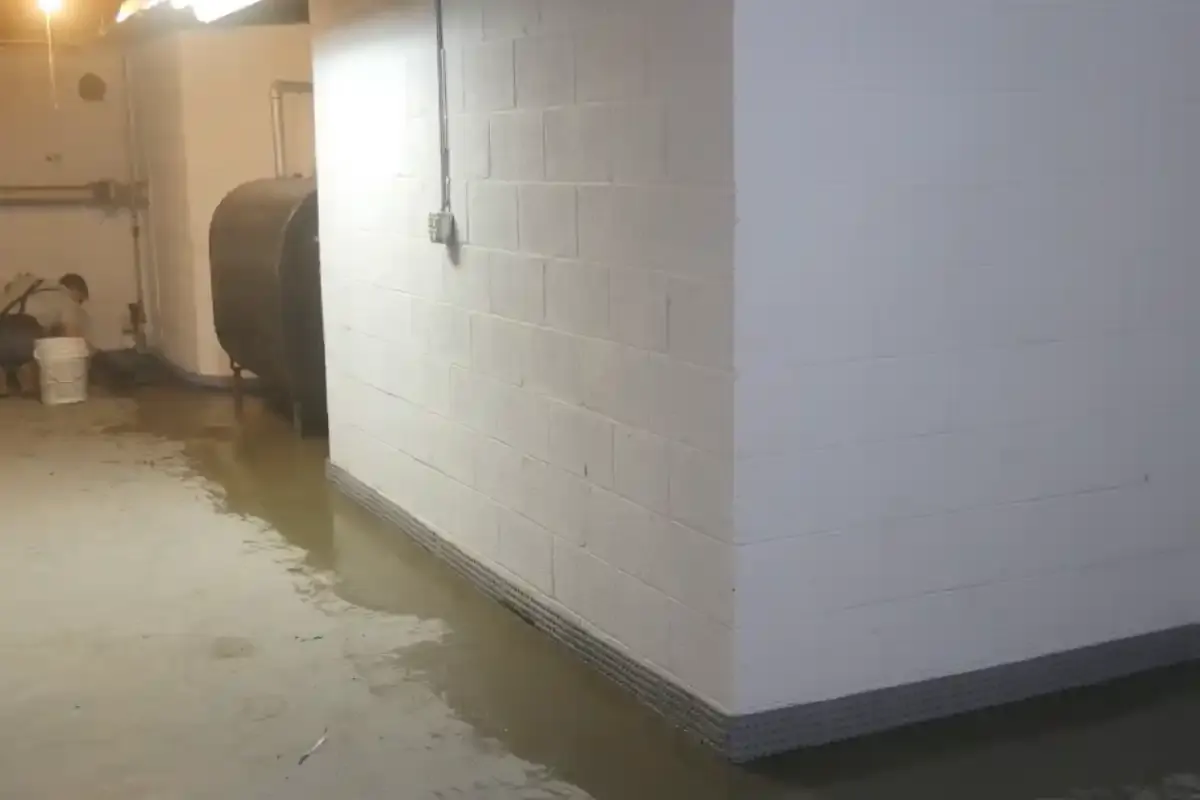
Flooring that is labeled waterproof will survive a spill, but it will not stop moisture from coming up through a slab. If the real cause is a leaking pipe, a failing sump pump or groundwater, the water simply collects underneath the new floor and finds another way out.
A good basement floor project has two steps. First you identify and fix the water source, then you choose a surface that tolerates the dampness that remains. That second step is where tile, vinyl plank and sealed concrete earn their place.
Here is how to work through both steps in a Maryland Heights home.
Where basement water really comes from
A leaking pipe or fixture
A pinhole in a supply line or a weeping drain joint can wet a slab for months before anyone notices.
A failed or undersized sump pump
If the pit overflows during a storm, water spreads across the floor in minutes.
Groundwater pressing through the slab or walls
Water finds cracks and joints at the base of the wall when the soil outside is saturated.
A floor drain that backs up
A blocked line sends water up through the floor drain, which is a plumbing problem, not a flooring one.
Condensation on cold pipes and walls
Warm humid air on cold surfaces drips and dampens the floor without any leak.
A pipe leak is the one cause a plumber can find and fix quickly. Leak detection uses listening gear and pressure tests to locate it before anyone tears up a floor.
A two-day test before you buy anything
This simple check tells you whether moisture is coming up through the slab.
Tape down a plastic sheet
Seal a two-foot square of clear plastic to the floor on all four sides.
Leave it for a day or two
Do not disturb it, and keep the room at its normal temperature.
Check for moisture
Water droplets under the plastic mean moisture is coming up through the slab. Droplets on top mean the air is humid.
Check near the walls and drains
Repeat the test near the wall base, near the floor drain and by the sump pit.
Flooring options compared
| Option | Handles moisture | Watch out for |
|---|---|---|
| Porcelain or ceramic tile on a sealed slab | Very well | Cold underfoot, cracks if the slab moves |
| Luxury vinyl plank, rigid core | Well, the planks do not swell | Moisture trapped underneath can grow mold on the slab |
| Sealed or epoxy-coated concrete | Well, if the slab is dry | Peeling if moisture pushes up from below |
| Interlocking raised tiles | Well, air can move beneath | Lowers ceiling height slightly |
| Carpet or laminate | Poorly | Swells, holds moisture and grows mold |
For a basement that has flooded before, tile or raised tiles are easier to dry and clean than anything glued down. If you have a sump pit, a sump pump check should come before the flooring contractor.
Fix the plumbing first, then the floor
A sensible order of work
- Stop any active leak and repair the pipe or fixture.
- Test and service the sump pump and its discharge line.
- Clear and test the floor drain and the line behind it.
- Address gutters and downspouts so roof water leaves the foundation.
- Choose the flooring last, and keep the seams of the floor accessible near the drain and pit.
Our basement waterproofing page explains the plumbing-side options such as interior drain tile and sump systems. Foundation cracks and exterior waterproofing belong to a foundation specialist.
Where each flooring type sits in a damp basement
Tile does best near the floor drain and the sump pit, since both are the spots most likely to see water. Set it on a sealed slab with a membrane and keep a few tiles unmortared or removable near the pit so a plumber can reach the access cover.
Rigid vinyl plank works well in the dry middle of the room. Leave the expansion gap around the edges, and do not glue it down, so you can lift sections to dry the slab after a spill. Skip any flooring that locks tight against a wall that has ever shown dampness.
If the basement also holds a laundry hookup or a water heater, put the washable surface there first. A failed hose or a tank leak is a plumbing event, and our water heater repair crews see how fast it soaks a finished floor. Homeowners in Creve Coeur and Bridgeton ask the same question about older basements.
Maryland Heights local note: drains and storm sewers
The City of Maryland Heights says the sewer lateral that serves your house is owned by the homeowner, so a backup coming up through a basement floor drain is usually a private-line problem. The city's Public Works department can be reached at (314) 291-6550 and after hours at (314) 298-8700.
The city maintains public streets and city storm sewers, but not private yard drains or the lateral on your property. If you see water in the street storm drain during heavy rain, tell Public Works. If water is in your floor drain, a plumber should look at your own line.
Sources: City of Maryland Heights Public Works and Sewer Lateral Program pages (primary, municipal).
Guidelines behind moisture and flooring
The EPA publishes guidelines for controlling moisture in buildings, and they start with keeping water away from the foundation before choosing a floor. Test the slab with a plastic sheet taped down for 24 hours, because a floor installed over a damp slab will fail whatever the product says.
Basement flooring questions
Some products tolerate water without swelling, such as tile and rigid vinyl plank. None of them stops water from entering the basement.
It is risky. Moisture trapped under a floor can grow mold, so find and fix the source first, then choose a floor that can dry.
Tile or raised tiles dry and clean more easily. Rigid vinyl plank is fine for minor spills, but a flood may force you to lift it.
Yes. If the pit overflows, water spreads over the new floor. Service the pump before you spend money on the surface.
The city maintains public streets and storm sewers, while the sewer lateral and floor drains on your property are yours. Call Public Works at (314) 291-6550 to find out where its responsibility ends.